
TL;DR
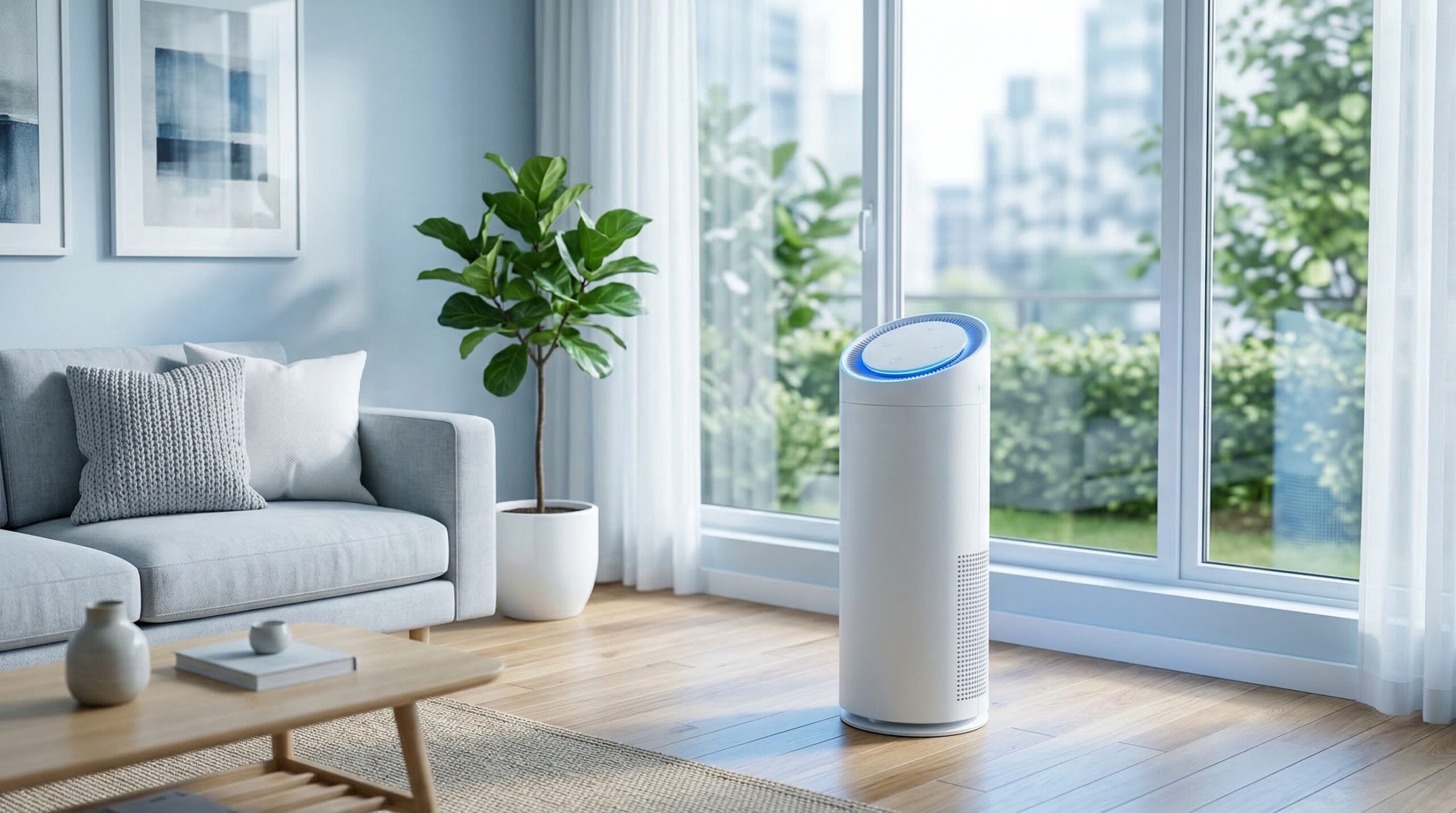
The “best air purifier” is the one that delivers enough clean-air output for your room at a fan speed (and noise level) you’ll actually run every day. We prioritize mechanical filtration (true HEPA + optional carbon for odors), realistic sizing using CADR/ACH, and avoiding ozone/ionizer gimmicks unless they can be fully disabled.
Top Recommended Air Purifiers
| Product | Best For | Price | Pros/Cons | Visit |
|---|---|---|---|---|
| Smart Air Blast MKII Air Purifier | Fast particle cleanup in medium-to-large rooms | Check price on Amazon | Strong cleaning performance; louder on higher speeds and has a big footprint | Visit Amazon |
| Meaco (U.K.) Limited MeacoDry Arete® One 20L Dehumidifier / Air Purifier | Damp homes that also want basic air cleaning | $240 – $280 | One appliance for humidity + filtration; bulkier and air-cleaning specs vary by configuration | Visit Meaco |
Important sizing note: Don’t buy based only on “covers X sq ft” marketing. For meaningful everyday cleaning, it’s smarter to size to a target of roughly 4–6 ACH (air changes per hour) for your room volume — and expect to use a higher fan speed during allergy season or wildfire smoke events.
Placement note: Performance assumes open airflow (don’t tuck the unit under furniture), several inches of clearance around the intake/outlet, and reasonably closed windows/doors in the target room.
Top Pick: Best Overall Air Purifier
Smart Air Blast MKII Air Purifier
Best for: A typical bedroom or living room (think a 250–600 sq ft space) where you want fast particle cleanup for dust, pollen, and smoke — and you’re okay trading some noise for speed when needed.
The Good
- Built around the right fundamentals: a mechanical HEPA-style purifier design intended to move a lot of air through a particle filter, which is what you want for allergens and PM2.5.
- Good speed range: multiple fan settings so you can run a quieter setting day-to-day and bump it up during high-particle events (like cooking smoke or wildfire haze).
- Fast “room reset” potential: this model is often chosen by buyers who care about rapid cleanup, not just a whisper-quiet low mode.
- Simple, practical operation: fewer “mystery features” means fewer reasons to accidentally run an unwanted ionization mode (a common concern with some purifiers).
The Bad
- It can get loud: like most high-throughput purifiers, higher speeds can be noticeably noisy — especially in a bedroom at night.
- Not small-room friendly: the footprint can feel oversized for tight layouts (small bedrooms, dorm rooms, nursery corners).
- Odor expectations: if your main issue is stubborn odors or VOCs, you’ll want to confirm the carbon stage is substantial enough for your needs (many “HEPA-first” units use only modest carbon).
4.1/5 across 128 Amazon reviews
“I have run Smart Health Model S in my office for a couple of weeks now and have already colleagues asking me about it. I have followed Smart Health’s research on indoor air quality for a while, including their research on DIY air purifiers and tests of various HEPA filters, but decided to wait until this model was available on Amazon, for cheaper US…” — Verified Amazon buyer (5 stars)
“It’s not a bad purifier per day, but it’s just lacking in enough areas to make it not worth the higher price.For one, it’s kind of large for a "small" purifier. It may look stylish but the fact that it’s a larger footprint that also needs to sit on the 4 legs in each of the 4 corners, it limits the places you can put it, like it’s too big to fit on most…” — Verified Amazon buyer (3 stars)
“I have followed Smart Health’s research on indoor air quality for a while, including their research on DIY air purifiers and tests of various HEPA filters” — verified buyer, 5 stars
Our Take: If you want one purifier that’s straightforward, fast at particle cleanup, and flexible enough for daily use in a real home, the Blast MKII is the best all-around pick here — just plan around the size and noise at higher speeds.
Meaco (U.K.) Limited MeacoDry Arete® One 20L Dehumidifier / Air Purifier
Best for: A damp bedroom or basement-like space where humidity control is the priority (comfort, musty air, condensation) but you also want an air-cleaning function in the same footprint — for example, a 150–400 sq ft room that runs humid most of the year.
The Good
- Two IAQ jobs, one device: dehumidification plus air cleaning can be a practical combo if your “air quality” problem is driven by dampness and that heavy, musty feel.
- Better real-world compliance: many people will actually run a dehumidifier consistently — so adding filtration to that routine can be more realistic than buying a second device you forget to use.
- Good fit for mold-prone conditions (indirectly): lowering humidity helps reduce conditions that can support mold growth (though it doesn’t remove existing mold or fix leaks).
- Space-saving vs two appliances: useful when you don’t have room for both a standalone purifier and a standalone dehumidifier.
The Bad
- It’s still a dehumidifier first: combo units can be convenient, but don’t assume the air-cleaning performance matches a dedicated high-CADR purifier sized to 4–6 ACH.
- Bigger and less “moveable”: compared with a typical air purifier, dehumidifiers are heavier and more awkward to relocate between rooms.
- Ongoing maintenance is more involved: you’re managing water (tank, drainage, cleaning) plus filter upkeep.
Our Take: If your house is humid and that’s the root of your comfort/IAQ complaints, this Meaco combo can make sense — but if you’re specifically chasing high airflow for allergies or wildfire smoke, a dedicated purifier is usually the stronger tool.
FAQ
What CADR do I need for my room?
CADR (Clean Air Delivery Rate) is a standardized way (commonly tied to the AHAM AC-1 method) to compare how quickly a purifier reduces particles like smoke, dust, and pollen. A practical way to size is: (1) calculate room volume (square feet × ceiling height), (2) pick a target ACH (often ~4–6 ACH for daily use; higher during smoke events), and (3) convert to a required airflow. If you want a deeper explainer on how air cleaners work and how to size them realistically, see the EPA guide to air cleaners in the home.
Should I trust “covers up to 1,000 sq ft” claims?
Not by themselves. Many coverage claims assume a low air-change rate (sometimes closer to “it technically cycles the air” rather than “it keeps particle levels meaningfully lower”). We recommend treating coverage numbers as marketing shorthand and using CADR/ACH logic instead — then choosing a model you can run on a medium setting without hating the noise.
Does a True HEPA filter remove wildfire smoke?
For the particle portion of wildfire smoke (especially fine particles like PM2.5), HEPA-class filtration is the right tool. The key is running enough airflow (CADR) for your room, often at higher fan speeds during events. Keep in mind: the smell of smoke is a separate challenge — you generally need substantial activated carbon for that, and even then carbon saturates and must be replaced.
Do air purifiers help with odors and VOCs?
Sometimes, but it depends heavily on the carbon stage. HEPA is for particles; activated carbon (or other sorbents) is for many odors and some VOCs. Thin “carbon sheets” tend to help only a little; heavier carbon media (more carbon mass and depth) typically performs better, but it also needs replacement more often if you’re dealing with frequent cooking odors, smoke, or strong off-gassing.
Is sleep/quiet mode enough to clean the air?
Often not. Quiet modes can be great for comfort, but they may move so little air that the cleaning impact is minimal — especially in larger rooms. A common strategy is to run a higher setting for an hour or two (for a faster “cleanup”), then step down to a quieter setting overnight.
How often do I need to replace air purifier filters?
It varies with your air (pets, smoke, outdoor pollution, construction dust) and how many hours per day you run the purifier. Many HEPA filters are replaced on a months-long schedule, while carbon can saturate faster if you have frequent odors. Before you buy any unit, check replacement filter pricing and availability — the ongoing cost is often more important than small differences in purchase price.
Are ionizers or ozone-generating air cleaners safe?
We generally recommend avoiding ozone-generating devices for home use. Some purifiers include “ionizer” or “plasma” modes; if a unit has those features, we prefer models where the function can be fully turned off and stays off. For additional safety context, you can browse the CARB list of certified air-cleaning devices (often used as a low-ozone reference point).
Where should I place an air purifier in a room?
Place it where air can circulate: keep several inches of clearance around the intake and outlet, avoid pushing it behind curtains or under desks, and don’t block the airflow path with furniture. In most rooms, a more open location (not jammed in a corner) helps the purifier mix and clean the room air more evenly.
Bottom Line
For most homes, the best air purifier is the one that delivers enough clean-air output for your room at a noise level you can live with daily — and that’s why the Smart Air Blast MKII is our top pick here. If you’re dealing with humidity as well as air quality, the MeacoDry Arete One 20L combo can be a practical single-appliance solution, but dedicated purifiers are usually the better choice when you need maximum particle cleanup.
Affiliate disclosure: This article contains affiliate links. We earn a small commission at no extra cost to you.