
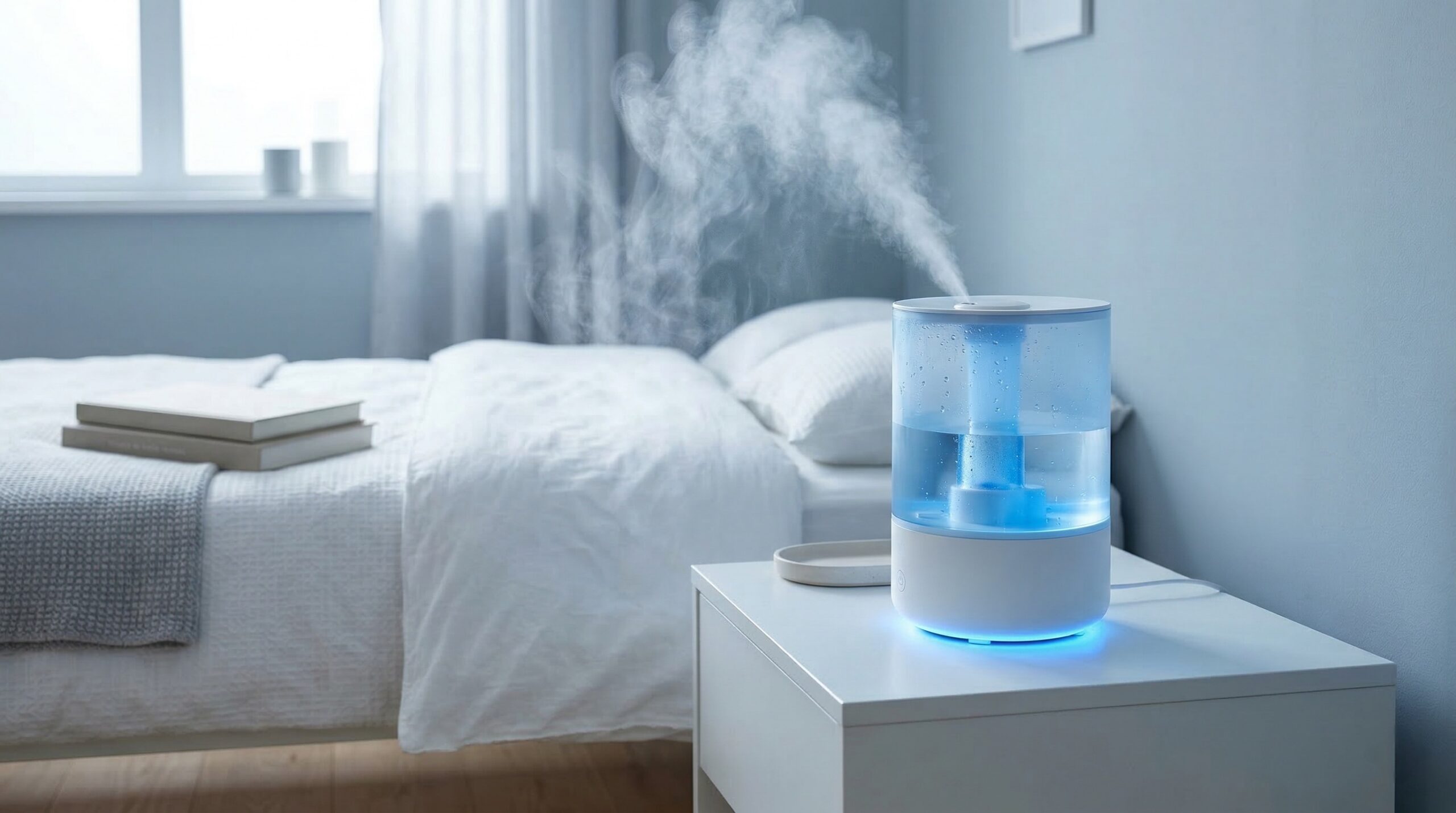
TL;DR
If your bathroom stays steamy for hours after a shower (or you’re battling recurring mildew), a small compressor-style dehumidifier can help pull humidity back down — especially when your exhaust fan is weak or not vented outdoors. Skip most “mini” thermoelectric units for bathrooms; they usually can’t remove moisture quickly enough for post-shower spikes. Prioritize a model with a drainage plan you’ll actually use (easy tank or gravity hose) and verify results with a cheap hygrometer.
What a Bathroom Dehumidifier Actually Is
A “dehumidifier for bathroom” isn’t a special category of appliance so much as a regular room dehumidifier chosen for a tough, very specific job: handling fast humidity spikes in a small, echo-y, often poorly ventilated space.
In plain terms, a dehumidifier pulls moist air in, removes water from that air, and blows drier air back out. The water ends up in a tank/bucket or goes out through a drain hose. In bathrooms, that matters because hot showers can push relative humidity (RH) into the mold-friendly range quickly — then that moisture sits on mirrors, windows, drywall, grout, and towels.
There are two common technologies you’ll see:
- Compressor (refrigerant) dehumidifiers: These are the workhorses for most homes. They typically remove moisture much faster, which is exactly what you want when you’re trying to pull RH down after a shower.
- Thermoelectric/Peltier “mini” dehumidifiers: These are the tiny desktop/closet units. They can help a little in mild dampness, but in many real bathrooms they don’t pull enough water fast enough to make a meaningful dent after a steamy shower.
Before you buy anything, it’s worth saying the quiet part out loud: ventilation is the primary fix. If your bathroom fan is dirty, undersized, or (very commonly) not vented outdoors, a dehumidifier can’t fully compensate. Guidance from organizations like the EPA and ASHRAE treats moisture control and proper exhaust as the first line of defense for mold and dampness — dehumidification is a helpful supplement when the room still won’t dry out.
That’s why “bathroom dehumidifier shopping” is less about square footage and more about a practical formula:
Ventilation check + moisture removal speed + drainage convenience + safe placement.
If you get those four things right, you’re much more likely to see the bathroom return to a safer RH range (often around 45–55%) instead of lingering above ~60% where mold is more likely to take hold.
Who a Bathroom Dehumidifier Fits Best
A bathroom dehumidifier tends to make the most sense when you’ve already done the basics (fan is clean, runs long enough, vents outdoors) and you still see dampness issues. It’s also a strong “band-aid while we plan the real fix” if you’re renting or can’t easily upgrade ventilation.
You’ll usually benefit most if you’re in one of these situations:
- Humidity lingers long after showers: Mirrors stay fogged, walls feel clammy, and towels/mats stay damp for hours.
- Recurring mildew despite cleaning: Especially on grout lines, caulk, or the ceiling — often a sign the room stays too humid too long.
- Your exhaust fan is weak, noisy, or not used consistently: A dehumidifier can help pull moisture down when real-world habits (or a bad fan) get in the way.
- You can’t vent outdoors properly: Some condos/older homes have tricky duct runs, or the fan dumps into an attic/void (a separate issue you should fix when you can).
- You want measurable control: Pairing a dehumidifier with a simple hygrometer lets you confirm the room returns to a reasonable RH after bathing.
One reality check from verified owner feedback: dehumidifiers are only as “hands-off” as your drainage setup. If you plan to rely on a pump or continuous drainage, reliability matters. As one buyer put it: “Bought the dehumidifier just over a year ago. I should have immediately returned it. The so called pump only worked sporadically for a few months, and then it stopped working just” — Trustpilot reviewer, 1 stars.
If that sounds like your household (busy, forgetful, no patience for daily bucket emptying), choose a setup you can live with — because the best dehumidifier is the one that actually gets used.
Who Should Skip a Bathroom Dehumidifier
Sometimes the right move is to skip the dehumidifier and fix the underlying problem first — especially when moisture is coming from someplace it shouldn’t.
Consider skipping (or at least delaying) a dehumidifier if:
- Your bathroom fan doesn’t vent outdoors (or you’re not sure). Fixing the venting path is the long-term solution for both moisture and indoor air quality. A dehumidifier can help symptoms, but it won’t correct a bad exhaust setup.
- You have a leak or chronic water intrusion: Plumbing leaks, a failing shower pan, wet drywall, or damp subfloor problems need repair. The EPA’s mold guidance emphasizes moisture source control, not just drying the air.
- You were planning to buy a tiny “mini” unit for heavy shower steam: Many thermoelectric minis simply aren’t built for rapid moisture removal after hot showers.
- You can’t place it safely: Bathrooms have splash zones. If the only outlet location forces you to run it where it can be sprayed or sit on a wet floor, don’t do it.
- You can’t commit to maintenance: If you won’t empty the tank, won’t manage a drain hose slope, and won’t clean the filter, performance will drop and you’ll likely abandon it.
There’s also a “buyer-experience” angle here: when support or order accuracy goes sideways, the hassle can outweigh any humidity benefit. A critical report we saw: “After ordering a 3500 dehumidifier unit, they sent me a smaller unit but kept my money for the larger one that I ordered. They refused to respond to my need to have this incorrect” — Trustpilot reviewer, 1 stars.
If you’re already on the fence, it may be smarter to start with a better fan (or a fan timer switch) and a hygrometer to prove what’s actually happening to RH after showers.
Price and Value
Bathroom-ready dehumidification doesn’t have to mean a huge, basement-grade machine — but it usually does mean stepping up from the cheapest “mini” devices. In general:
- Mini/Peltier units are often the lowest-cost option, but also the lowest-impact for shower steam. They can be fine for mild dampness, but many people buy them expecting fast post-shower dry-down and end up disappointed.
- Small compressor units typically cost more up front, but deliver the “speed” you need in a bathroom — meaning fewer hours spent above ~60% RH.
- Drainage features can change value: A reliable auto-shutoff, easy tank removal, included hose fitting, and stable design matter more in a bathroom than in a basement.
For the model we’re featuring here (a Wi‑Fi-enabled small compressor unit from hOmeLabs), the provided product listing doesn’t include confirmed pricing data. When that happens, our value advice is simple: compare it against similarly sized compressor dehumidifiers and decide whether the extra convenience features (like Wi‑Fi control and included drain hose support) are worth paying for — especially if your bathroom is near bedrooms and you’ll care about scheduling and run time.
If you’re trying to minimize total spend, it’s still worth pricing a ventilation upgrade (or at least a timer switch). In many homes, the most cost-effective moisture control is “fan that actually vents outdoors + enough run time,” with a dehumidifier reserved for stubborn cases.
Common Mistakes When Trying a Bathroom Dehumidifier
Based on how bathrooms behave (and what owners commonly run into), these are the mistakes that most often lead to “this didn’t work” outcomes:
- Buying too little capacity (or the wrong technology): A weak unit can’t catch up to the moisture load from daily showers, so RH stays high for hours.
- Relying on a pump or hose setup without testing it: If the pump is inconsistent or the hose can’t drain by gravity, the unit may shut off full — or worse, you may stop using it.
- Placing it where airflow is blocked: Wedged between the toilet and vanity, tight against a wall, or hidden behind a hamper = slow dry-down.
- Turning it on too late (or turning it off too soon): In many bathrooms, running during the shower plus 20–30 minutes after (alongside the exhaust fan) works better than trying to “fix it later.”
- Skipping the hygrometer: Without measuring RH, it’s easy to assume it’s “fine” because the mirror cleared — while the room is still sitting at mold-friendly humidity.
- Ignoring the real root cause: A dehumidifier won’t fix a leak, missing caulk, saturated drywall, or a fan dumping moist air into an attic cavity.
A very practical owner-reported pitfall is over-trusting convenience features like pumps without a backup plan. One verified complaint: “Bought the dehumidifier just over a year ago. I should have immediately returned it. The so called pump only worked sporadically for a few months, and then it stopped working just” — Trustpilot reviewer, 1 stars.
If you recognize yourself in that risk profile, pick a unit you can run with simple gravity drainage into a tub/sink (hose sloping downward the whole way), or choose a tank that’s genuinely easy to empty daily.
FAQ
What humidity should a bathroom be?
Aim to keep bathroom RH from lingering above about 60%, since persistent dampness is associated with mold growth risk. Many households target roughly 45–55% RH as a practical range. The EPA’s mold and moisture guidance emphasizes controlling moisture (not just cleaning visible spots) to prevent ongoing problems.
Should I run a dehumidifier during or after a shower?
Usually during and for 20–30 minutes after works best — especially if you also run the exhaust fan. Bathrooms spike fast, so faster pull-down helps. If you’re not sure what’s working, add a small hygrometer and watch how quickly RH drops after bathing.
Is a bathroom exhaust fan enough on its own?
Often, yes — if it’s sized appropriately, clean, and actually vents outdoors. Residential ventilation best practices are covered in standards like ASHRAE residential ventilation guidance (Standard 62.2). If your bathroom still stays humid for hours after showers, a dehumidifier can be a useful supplement.
Can I use a mini (Peltier) dehumidifier in a bathroom?
You can, but set expectations: many mini/thermoelectric units remove moisture slowly and may not meaningfully reduce RH after a hot shower. If your main issue is heavy steam and lingering dampness, a small compressor dehumidifier is usually a better fit.
Where should I drain a bathroom dehumidifier hose?
Use a gravity path to a bathtub, shower, sink, or a proper floor drain — meaning the hose should slope downward the entire way with no kinks or uphill runs. If your layout can’t support gravity drainage, you’ll be stuck emptying the tank or relying on a pump (which adds complexity).
Is it safe to run a dehumidifier in a bathroom?
It can be, but you need to be strict about electrical and splash safety: keep the unit out of direct spray zones, use a GFCI-protected outlet where required, and avoid extension cords in damp areas. If you have health concerns related to dampness or mold exposure, consider discussing symptoms with a board-certified pulmonologist, and review public-health guidance like CDC/NIOSH dampness and mold information.
When should I call a pro instead of buying a dehumidifier?
If you suspect hidden moisture (soft drywall, bubbling paint, musty odor that won’t go away, recurring ceiling stains) or you see widespread mold growth, a dehumidifier is not the main solution. At that point, it’s reasonable to call an HVAC contractor (ideally NATE-certified) to evaluate ventilation and ducting, and/or a certified IAQ professional to help identify moisture sources and next steps.
Looking for these on Amazon? Browse dehumidifier for bathroom on Amazon →
Bottom Line
A bathroom dehumidifier can be a solid “second line” tool when your exhaust fan and habits aren’t enough to bring humidity down quickly after showers. Focus on compressor-based units, choose a drainage plan you’ll stick with, and confirm results with a hygrometer so you’re not guessing.
If your bathroom is staying damp for hours or you’re seeing recurring mildew, treat ventilation as the foundation — then use dehumidification to shorten the time your room spends in that mold-friendly humidity zone.
Affiliate disclosure: This article contains affiliate links. We earn a small commission at no extra cost to you.