
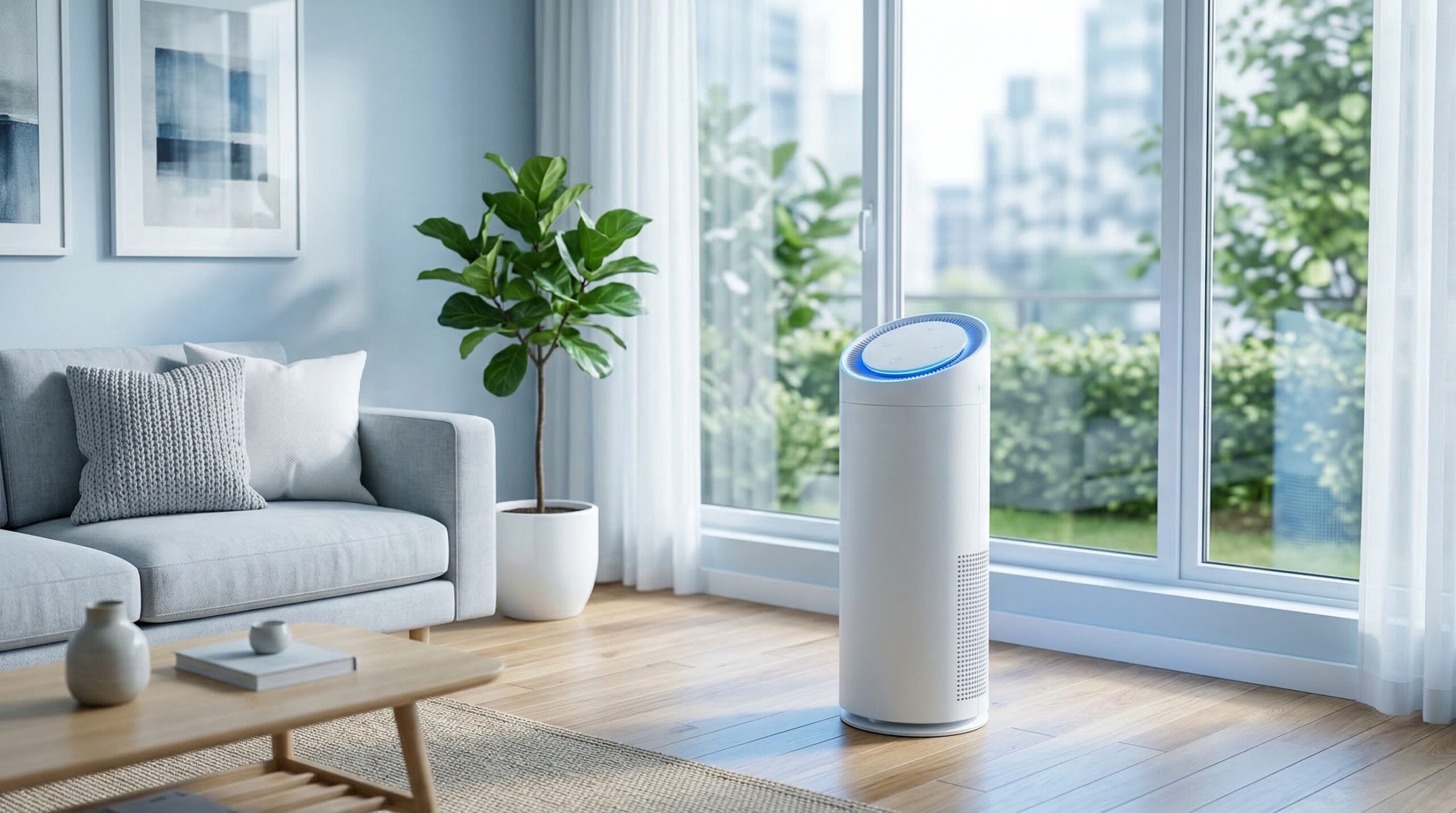
TL;DR
Air purifier + humidifier combos can make sense for a single room where you truly need both cleaner air and added moisture, but most are compromise devices that require consistent cleaning to stay hygienic. We’d size the air-cleaning side first (ideally using CADR concepts), then only run the humidifier to keep your room around 30–50% relative humidity to avoid condensation and mold risk.
Top Recommended Air Purifiers
| Product | Best For | Price | Pros/Cons | Visit |
|---|---|---|---|---|
| ORB 2-in-1 Air Purifier & Humidifier Combo | Budget-friendly small rooms | Check price on Amazon | Simple 2-in-1 approach; small humidifier capacity | Visit Amazon |
| RIA BreezeGuard 2-in-1 Air Purifier Humidifier Combo | Buyers who want a premium-priced combo | Check price on Amazon | High user rating in a small sample; limited verified-owner detail | Visit Amazon |
Top Pick: Best Overall Air Purifiers
ORB 2-in-1 Air Purifier & Humidifier Combo
Best for: A small bedroom or home office (think ~100–250 sq ft) where you want a single device to lightly tackle dust and dryness — and you’re okay refilling a smaller tank.
The Good
- Convenient all-in-one footprint for a nightstand corner or tight apartment bedroom where you can’t fit two devices.
- Verified owner feedback includes praise for easy day-to-day use, which matters because combo units only stay safe if you keep up with cleaning and refills.
- Buyer reports often describe it as quiet at lower settings, which is what you’ll typically use for sleep.
- More approachable upfront cost than many combos, leaving budget for replacement filters and routine supplies (like a soft brush for cleaning).
The Bad
- Humidifier capacity is a recurring complaint — expect more frequent refills, especially in winter or in a heated bedroom.
- Noise is subjective and can jump at higher fan settings; some users say it’s only truly quiet when dialed way down.
- Like most combos, performance claims can be hard to compare across brands when CADR and AHAM Verifide details aren’t clearly provided.
3.9/5 across 145 Amazon reviews
“This item is very good, no noise when in function, and the price is very good. The size is great and the water capacity is great. The item is also easy to use, function.” — Verified Amazon buyer (5 stars)
“Not worth it. Small capacity for water for humidifier and promise of free second filter on line according to registration never fulfilled. I don’t notice any difference and setting is loud unless it’s practically turned off.” — Verified Amazon buyer (2 stars)
Our Take: For most shoppers looking for the best air purifier and humidifier combo on a realistic budget, the ORB is the most straightforward pick — but only if you treat the humidifier side like a “cleaning-required appliance,” not a set-and-forget gadget.
RIA BreezeGuard 2-in-1 Air Purifier Humidifier Combo
Best for: A medium-size primary bedroom or living space (roughly 200–400 sq ft) if you’re willing to pay more for a combo and you prioritize user satisfaction signals over spec transparency.
The Good
- Strong early user sentiment: it’s listed at 4.7/5 across 30 Amazon reviews, which is encouraging even though the sample is still small.
- Single-device convenience for households that want fewer appliances and fewer cords in one room.
- May appeal to buyers who want a more “premium” combo category option versus entry-level units.
The Bad
- Limited detail available from verified owner feedback in the data we’re working with (for example, fewer concrete reports about noise at night, tank cleaning ease, and real-world coverage).
- Higher upfront cost raises the stakes: if the humidifier design is annoying to clean or the purifier side feels underpowered, you can’t upgrade one half without replacing the whole unit.
Our Take: The BreezeGuard is a reasonable “premium-priced combo” candidate for a single-room setup, but we’d want clearer performance specs (and more long-term owner feedback) before calling it an easy value pick.
FAQ
Are air purifier and humidifier combos as effective as buying two separate devices?
Often, no. Combos commonly involve tradeoffs: you may get lower particle-cleaning performance per dollar than a dedicated air purifier, plus you inherit the ongoing cleaning needs of a humidifier water system. That said, a combo can still make sense if you need both functions in the same room and you’ll actually keep up with tank emptying and cleaning.
What humidity level should I aim for in my house?
A practical target for most homes is roughly 30–50% relative humidity. Too low can feel dry (static, scratchy throat, dry skin), while too high can cause condensation on windows/walls and increase mold and dust-mite risk. Comfort and safety guidance from groups like ASHRAE generally supports avoiding sustained high indoor humidity, especially in colder climates.
How do I size the “purifier” part of a combo for my room?
Look for a model that publishes a credible CADR (Clean Air Delivery Rate) or at least provides enough airflow information to judge whether it can clean your room meaningfully. AHAM’s CADR approach is the clearest way to compare air-cleaning performance across models; you can learn more via AHAM Verifide (CADR program). If a combo only says “covers up to X sq ft” with no CADR context, treat that number cautiously.
Should I avoid ionizers, “plasma,” or ozone features in combo units?
As a baseline, we prefer mechanical filtration (HEPA/HEPA-like media plus a pre-filter) because ozone is a lung irritant. The EPA discusses limits and concerns around ozone-producing air cleaners in its home air cleaning guidance: EPA air cleaners and air filters guidance. If a unit has an ionizing feature, the safer stance is to choose one that can be disabled and has clear compliance documentation.
Do humidifiers in combo units need special cleaning?
Yes — any humidifier that holds water can grow biofilm if it isn’t cleaned and dried regularly. The CDC emphasizes routine cleaning and proper maintenance to reduce mold/bacteria risks; see CDC guidance on humidifier use and cleaning (navigate to their humidifier cleaning recommendations). If you’re mold-prone, immunocompromised, or caring for a baby, it can be worth asking a board-certified pulmonologist or certified IAQ professional about safer humidity practices for your situation.
Will a combo unit help with allergies and asthma?
It can help with airborne particles (like pollen and dust) if the purifier side has strong filtration and sufficient airflow for your room, but it’s not a medical treatment. Also, humidity cuts both ways: keeping air from getting too dry may reduce irritation, but pushing humidity too high can increase dust mites and mold. If asthma symptoms are frequent, it’s worth checking in with a clinician and addressing triggers beyond gadgets (moisture control, ventilation, source reduction).
How much does it cost to run an air purifier and humidifier combo each year?
Think in three buckets: electricity, air filters (HEPA/media plus any carbon), and humidifier consumables (wicks, cartridges) plus cleaning supplies. Yearly cost varies widely because filter pricing and replacement intervals vary — and some combos burn through filters faster in dusty homes. Before you buy, price out replacement filters/wicks from the manufacturer or retailer and assume you’ll follow the recommended schedule rather than stretching them.
Bottom Line
If you truly need both functions in the same room, a combo can be convenient — but it only works well when you size the purifier side appropriately and keep humidity in a safe range. For most shoppers, the ORB 2-in-1 Air Purifier & Humidifier Combo is the most practical pick based on price and verified owner feedback, with the important caveat that you should expect regular tank cleaning and potentially frequent refills.
Affiliate disclosure: This article contains affiliate links. We earn a small commission at no extra cost to you.