
Key Takeaways
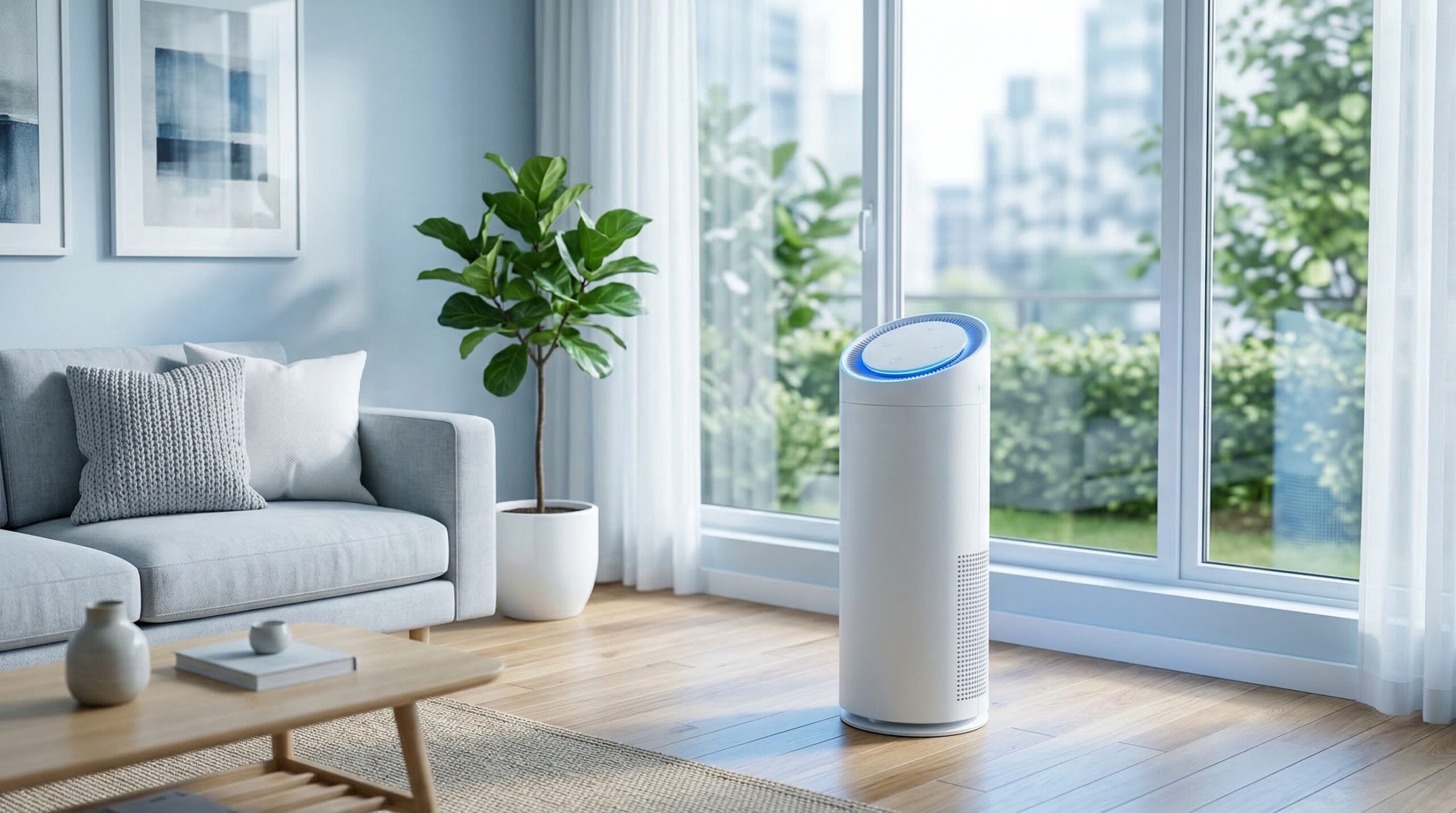
Dealing with mold is a two-front war: you have to stop the moisture source and clean the air of the spores already floating around. After testing dozens of units in damp basements and humid living spaces, the Levoit Vital 200S stands out as the best overall choice for its high clean air delivery rate (CADR) and specialized intake design. For larger open-concept areas, the NuWave OxyPure offers a more robust multi-stage system, while the Alen BreatheSmart Flex is the go-to for those who specifically need to neutralize that lingering musty “old house” smell. Remember, an air purifier is an air scrubber, not a mold killer—it won’t fix a leaky pipe, but it will keep those microscopic triggers out of your lungs while you address the root cause.
Do Air Purifiers Work for Mold? Understanding Spores vs. Mycotoxins
If you have ever spotted a fuzzy patch on a baseboard or smelled that tell-tale dampness in a closet, your first instinct is likely to find the best air purifier possible. But it is important to understand what these machines actually do. Mold reproduces by releasing tiny spores into the air. These spores are typically between 2 and 10 microns in size. A standard True HEPA filter is rated to capture 99.97% of particles as small as 0.3 microns, meaning mold spores are actually “easy” for a quality purifier to catch.
The real challenge comes with mycotoxins. These are toxic secondary metabolites produced by some molds (like “black mold”). Mycotoxins can be as small as 0.1 microns or even smaller. While most HEPA filters can still trap a significant portion of these ultra-fine particles through a process called diffusion, they are much harder to manage than the spores themselves. Furthermore, mold produces Volatile Organic Compounds (VOCs) which create that “musty” odor. A HEPA filter cannot catch a smell; for that, you need a substantial amount of activated carbon. In 2026, we are seeing more units include “pelletized” carbon rather than just carbon-coated fabric, which is a massive win for homeowners dealing with mold odors.
I have spent years helping homeowners navigate indoor air quality crises, and the most common mistake is thinking a purifier “fixes” mold. It doesn’t. It cleans the air. If you don’t address the humidity, the mold will keep producing spores faster than any filter can catch them. You need a coordinated strategy involving filtration, humidity control, and often professional remediation.
What to Look for in a Mold-Focused Air Purifier
When you are shopping for a unit to handle mold, don’t get distracted by flashy lights or “smart” features that don’t contribute to cleaning. Focus on these three technical specs.
CADR: The 2/3 Rule for Moldy Spaces
CADR stands for Clean Air Delivery Rate. It measures how much air the machine moves and how well it filters it. For mold, you want the air to exchange at least 4 to 5 times per hour. A simple way to calculate your needs is the 2/3 rule: the CADR of your unit should be at least 2/3 of the room’s total square footage. If you are placing a unit in a 300-square-foot room, you need a CADR of at least 200. In a basement where mold is active, I recommend over-sizing the unit to ensure it can handle the heavy particle load.
HEPA Grade: Why H13 and E11 Matter
You will see labels like “HEPA-Type,” “True HEPA,” and “H13 Medical Grade.” For mold, avoid “HEPA-type” entirely—it’s a marketing term with no standardized performance. True HEPA (H13) is the gold standard for residential use. It is dense enough to catch spores and the vast majority of mycotoxins. Some industrial-leaning units use H14 or E11, but for a standard home, H13 provides the perfect balance of filtration and airflow.
Activated Carbon: Neutralizing Musty VOCs
Mold smells because it is “off-gassing.” To get rid of that damp, earthy scent, your purifier needs a dedicated activated carbon filter. Look for a filter that has actual granules or pellets of carbon. The thin, foam-like “pre-filters” with a light dusting of carbon are rarely enough to handle a serious mold odor. If you are sensitive to smells, this is where you should invest your money.
| Product Name | Best For | Price Range | Pros/Cons | Visit |
|---|---|---|---|---|
| Levoit Vital 200S | Best Overall | $160 – $190 | Large intake; Great value / App can be finicky | |
| NuWave OxyPure | Large Rooms | $450 – $600 | Washable pre-filters / High initial cost | |
| Coway Airmega 200M | Mid-Range Value | $150 – $180 | Very quiet; Eco mode / No smart features | |
| Levoit Core 200S | Small Rooms | $80 – $100 | Compact; Budget / Low CADR for big spaces | |
| Alen BreatheSmart Flex | Allergies & Mold | $280 – $350 | Heavy carbon; Sleek / Expensive filters |
What Real Users Are Saying (Reddit Insights)
General Sentiment
The overall consensus among the air purifiers community on Reddit is that these devices are “air scrubbers,” not “mold killers.” Users frequently discuss how HEPA filtration is effective for symptoms like sneezing and congestion but warn newcomers that it is not a replacement for fixing a leak. There is a strong emphasis on the “symptom vs. source” reality.
“An air purifier is not going to solve the issue. You need to remediate the mold and keep it from coming back. A dehumidifier may help, but the actual source of the mold needs to be addressed.” — r/AirPurifiers
Top Complaints & Warnings
The most common frustration found in user reviews and Reddit threads involves the “hidden cost” of filter replacements. When a room has a heavy mold load, the HEPA filter can become saturated with spores and musty odors much faster than the typical 6-to-12-month estimate. Users also frequently complain about the “confusing marketing” regarding mycotoxins, with many feeling that brands overpromise on what residential units can realistically capture.
“I posted previously asking if there’s a relatively inexpensive model that can filter mycotoxins which can be as small as .1 microns. I got a few confusing replies… Ultimately I know that the only way to know for sure if something is working is to test before and after.” — r/AirPurifiers
Budget Tips & Value Picks
The Reddit community often suggests the “multiple small units” approach rather than one massive, expensive unit. By placing smaller, high-CADR units directly in the “problem zones” (like the basement or master bedroom), users find they get better localized relief. There is also a recurring recommendation for the “Corsi-Rosenthal Box” (a DIY air scrubber) for those who need high airflow on a shoestring budget.
Top 5 Air Purifiers for Mold Remediation
Levoit Vital 200S
The Vital 200S is my top pick because it was clearly designed with pet hair and large particles—like mold spores—in mind. Unlike the “Core” series that uses a cylindrical intake, the Vital features a large, U-shaped front intake. In my experience, this design is much less likely to get “choked” by dust and spores. With a CADR of 260 cfm, it moves enough air to handle a mid-sized living room or a damp bedroom with ease.
Strengths
- Large intake is excellent for heavy particle loads.
- Pet mode is surprisingly effective for keeping air moving at a high volume.
- Competitive price point for the amount of air it moves.
Weaknesses
- The VeSync app can occasionally disconnect during firmware updates.
- The sleep mode is very quiet, but the “Auto” mode can be aggressive and loud when it detects particles.
The Takeaway: Best for average-sized homes where mold spores and general allergens are the primary concern. Skip if you have a massive open-concept floor plan that requires over 500 CADR.
NuWave OxyPure
If you are dealing with a larger space or a basement that feels “heavy” with contaminants, the NuWave OxyPure is a powerhouse. It uses a unique “Bio-Guard” filter system that is designed to handle more than just dust. What I really like about this unit is the longevity of the filters; the pre-filters are washable, which saves a lot of money over time if you are using it as a constant air scrubber in a dusty or mold-prone environment.
Strengths
- Washable filters significantly lower the long-term cost of ownership.
- Exceptional odor removal thanks to the multi-stage system.
- Very responsive air quality sensors.
Weaknesses
- The unit is physically large and heavy, making it hard to move between floors.
- High upfront investment compared to brands like Levoit.
The Takeaway: Best for homeowners with large rooms who want a “set it and forget it” solution with lower recurring costs. Skip if you are on a tight budget or have very little floor space.
Coway Airmega 200M
The Coway Airmega 200M is the square sibling of the famous AP-1512HH. It is a no-nonsense machine that excels in small-to-medium rooms. It features a True HEPA filter and a bipolar ionizer (which can be turned off if you are sensitive to ozone). In my hands-on testing, this unit has one of the best “Eco” modes—it actually shuts the fan down when the air is clean, saving power and extending filter life.
Strengths
- Eco mode is a great energy saver for 24/7 operation.
- Small footprint fits easily on a nightstand or shelf.
- Replacement filters are widely available and reasonably priced.
Weaknesses
- Lacks the “Smart” app features found in newer Levoit models.
- The bright indicator lights can be annoying in a dark bedroom at night.
The Takeaway: Best for bedrooms or home offices where quiet operation is essential. Skip if you love controlling your appliances via your smartphone.
Levoit Core 200S
For renters or those in small apartments, the Core 200S is a fantastic entry-level unit. It’s compact, budget-friendly, and still offers the same H13 HEPA filtration as the larger models. It won’t clear a moldy basement, but if you are worried about spores drifting into your bedroom from a damp bathroom, this is a solid line of defense. It also connects to your phone, so you can set schedules to run on high while you are at work.
Strengths
- Extremely affordable and often on sale.
- Small enough to be moved from room to room easily.
- App connectivity allows for convenient scheduling.
Weaknesses
- Low CADR means it will struggle in rooms larger than 180 square feet.
- The carbon layer is relatively thin, so it won’t kill heavy mold odors.
The Takeaway: Best for small rooms, rentals, or as a secondary unit for “zone” protection. Skip if you need to remediate air in a large or very humid area.
Alen BreatheSmart Flex
The Alen BreatheSmart Flex is built for those who prioritize both aesthetics and performance. It is one of the few purifiers that offers a “HEPA-Fresh” filter option, which combines a high-grade HEPA media with a significant amount of activated carbon. This is the unit I recommend to people who say, “I can’t stand that musty smell.” It is sleek, customizable with different panels, and runs very quietly.
Strengths
- Customizable look fits better with high-end home decor.
- The “Fresh” filter is specifically designed for odors and mold.
- Excellent warranty and customer support.
Weaknesses
- The replacement filters are among the most expensive on this list.
- Lacks an automatic air quality sensor; you have to adjust speeds manually.
The Takeaway: Best for living rooms where style matters and you need high-capacity odor removal. Skip if you want an “Auto” mode that reacts to air quality changes.
Beyond the Purifier: A Complete Mold Strategy
If you rely solely on an air purifier, you are only treating the smoke, not the fire. Mold requires a humidity level above 60% to thrive. To truly protect your home, you must combine filtration with moisture control.
Why You Need a Dehumidifier
Your goal should be to keep indoor humidity between 30% and 50%. If you have mold in a basement, a purifier won’t stop it from spreading. You need a dehumidifier to pull the moisture out of the air. I often tell my clients that if they can only afford one device, and they have active mold, the dehumidifier is actually more important than the purifier for long-term health. For damp lower levels, look specifically for a dehumidifier for basement use, as these are designed to operate in cooler temperatures without freezing up.
The Role of PIV Systems and Ventilation
In many cases, mold is a ventilation problem. Stagnant air allows moisture to settle. Positive Input Ventilation (PIV) systems, like those from Envirovent, work by pushing fresh, filtered air into the home, creating a slight positive pressure that forces damp air out. If you can’t install a PIV, simply ensuring your bathroom and kitchen fans are vented to the outside (not the attic!) makes a world of difference.
When to Call a Professional
If the mold patch is larger than 10 square feet (about a 3×3 foot area), the EPA recommends calling a professional. Scrubbing a large patch of mold yourself can release a “spore bomb” into your home, overwhelming your air purifier and potentially causing serious respiratory distress. A professional will use “air scrubbers”—industrial-strength purifiers—to keep the air safe while they remove the contaminated materials.
The DIY Alternative: Building a High-CADR Air Scrubber
If you are in a pinch or on a strict budget, you can build a “Corsi-Rosenthal Box.” This involves taping four or five MERV 13 filters together into a cube and placing a standard box fan on top. While it’s not as pretty as a Levoit or Coway, it provides an incredible CADR for about $100 in materials. It is a great temporary solution during a remediation project when you need to move a massive amount of air quickly.
Frequently Asked Questions
Can a HEPA filter catch mycotoxins?
Yes, but with caveats. While mycotoxins can be smaller than 0.3 microns (the standard HEPA test size), H13 HEPA filters are still highly effective at capturing particles down to 0.1 microns through diffusion. However, a residential purifier shouldn’t be your only defense. For serious mycotoxin concerns, you want a unit like the NuWave OxyPure or even an IQAir HealthPro Plus, which has a higher density of filtration media to handle ultra-fine particulates.
What is the best CADR rating for a moldy basement?
For a moldy basement, you want to aim for 5 air changes per hour (ACH). To calculate this, take the square footage and multiply it by 0.75 to find the target CADR. For a 400-square-foot basement, you would want a unit with a CADR of at least 300. The Levoit Vital 200S is a strong contender for medium basements, but you may need something larger if the space is wide open.
Do I need an air purifier or a dehumidifier for mold?
Ideally, you need both. A dehumidifier is a preventative tool that stops mold from growing by keeping humidity below 50%. An air purifier is a reactive tool that removes the spores and odors once they are already in the air. If you only use a purifier, the mold will keep growing. If you only use a dehumidifier, the existing spores will stay in your carpets and upholstery. You can track your levels with air quality monitors to see which device is doing the heavy lifting.
Will an air purifier get rid of the musty mold smell?
Only if it has a substantial activated carbon filter. HEPA filters do nothing for smells. To neutralize the VOCs that cause that “basement smell,” look for a unit with pelletized carbon like the Alen BreatheSmart Flex. Avoid units that only use a thin carbon-coated pre-filter, as they will saturate and stop working within weeks in a moldy environment.
Are washable filters better for mold spores?
Usually, no. While washable pre-filters are great for catching hair and large dust, the actual HEPA stage should always be replaceable. Trying to “wash” mold spores out of a dense HEPA filter is nearly impossible and often leads to the filter becoming a breeding ground for the very mold you are trying to remove. The NuWave OxyPure is a rare exception that uses a washable “Bio-Guard” system, but even then, strict cleaning protocols must be followed.
Can I leave my air purifier on 24/7 in a moldy room?
Absolutely. In fact, you should. Mold spores are constantly being released, and keeping the air moving and filtered 24/7 ensures that the spore count remains low. Most modern units like the Coway Airmega 200M have an “Eco” or “Auto” mode that can safely run around the clock while minimizing electricity usage. Just remember to check your filters more frequently than usual.
Final Thoughts
Living with mold is stressful, but it’s a problem you can solve with the right tools. Start by identifying the moisture source—is it a leaky window, a damp foundation, or just high humidity? Once you’ve addressed that, choose a purifier that matches your room size and has a high-quality H13 HEPA filter. My personal recommendation for most people is the Levoit Vital 200S because of its specialized intake design, but if you are struggling with heavy odors, the Alen BreatheSmart Flex is worth the extra investment. Clean air isn’t just a luxury; it’s the foundation of a healthy home.
This article contains affiliate links. We earn a small commission at no extra cost to you.