
TL;DR
For most acoustic guitar owners, the safest choice is a leak-resistant in-case or soundhole humidifier used with a hygrometer so you can keep the guitar near the usual 45% to 55% relative humidity target. If you live in a very dry climate, travel often, or store several guitars outside their cases, you may need either more frequent refills or a whole-room approach instead of relying on one small case unit.
Top Recommended Guitar Humidifiers
| Product | Best For | Price | Pros/Cons | Visit |
|---|---|---|---|---|
| Oasis Guitar Humidifier OH-1 – For Soundhole | One acoustic guitar in a case | Check price on Amazon | Purpose-built soundhole design; needs regular refills in dry homes | Visit Amazon |
| Vornado EVDC300 Evaporative | Multi-guitar room storage | — | Works for whole-room humidity control; not guitar-specific and takes more space | Visit Vornado |
Top Pick: Best Overall Guitar Humidifiers
Oasis Guitar Humidifier OH-1 – For Soundhole
Best for: Most acoustic-guitar owners storing one instrument in its case, especially during winter heating season or in a moderately dry home where direct in-case humidity is easier to manage than humidifying a whole room.
The Good
- Guitar-specific soundhole design that targets the instrument directly instead of trying to treat the whole room.
- Fits the most common use case: one acoustic guitar stored in a closed case.
- Strong long-term review volume suggests it has stayed relevant for years with everyday owners.
- Often chosen by buyers in very dry climates who need a focused humidity source.
- Lower ongoing cost than many replacement-pack systems if you do not mind refilling and monitoring it yourself.
The Bad
- Needs regular refills, and that can become frequent when indoor humidity stays very low.
- Any soundhole humidifier needs careful filling, because excess moisture inside the instrument is the main risk to avoid.
- You still need a separate hygrometer, since humidifying without measuring is guesswork.
4.6/5 across 1,002 Amazon reviews
“I have a very dry basement and need to humidify my acoustic guitars during our winter when humidity can drop into the 20s. Anytime I buy acoustic now I will immediately order a new oasis humidifier on Amazon so that when the acoustic arrives I can keep it humidified perfectly.It’s very easy to see when it needs to be refilled as it will shrink as shown in…” — Verified Amazon buyer (5 stars)
“After losing one guitar due to the wood drying out and starting to split, when my son started playing guitar, the store salesman told us about guitar humidifiers. A little skeptical, I looked into the subject on the web and discoverd a whole new world. All the sites of the guys who hand make guitars talked about the need for maintaining the proper humidity…” — Verified Amazon buyer (4 stars)
“I have an Oasis case humidifier, an Oasis soundhole humidifier, and a D’Addario soundhole humidifier with the sponge. The case humidifier is, by far, the most convenient.” — AcousticGuitar discussion
“First I bought the highly recommended Planet Waves Humidipak, but it’s too expensive to maintain when the humidity is almost always under 30%, and for extended period of times, in the single digits.” — verified buyer, 5 stars
Our Take: This is the best overall pick because it matches how most people actually store an acoustic guitar — in its case — while keeping the setup simple, affordable, and direct, as long as you refill it carefully and check humidity with a hygrometer.
Vornado EVDC300 Evaporative
Best for: Buyers keeping several guitars on stands in a dedicated music room, or anyone in a dry house who wants to stabilize the whole environment instead of humidifying one case at a time.
The Good
- Supports whole-room humidity, which makes more sense than multiple case units when you own several instruments.
- Good fit for guitars stored outside their cases, where a room-level solution is often the only practical option.
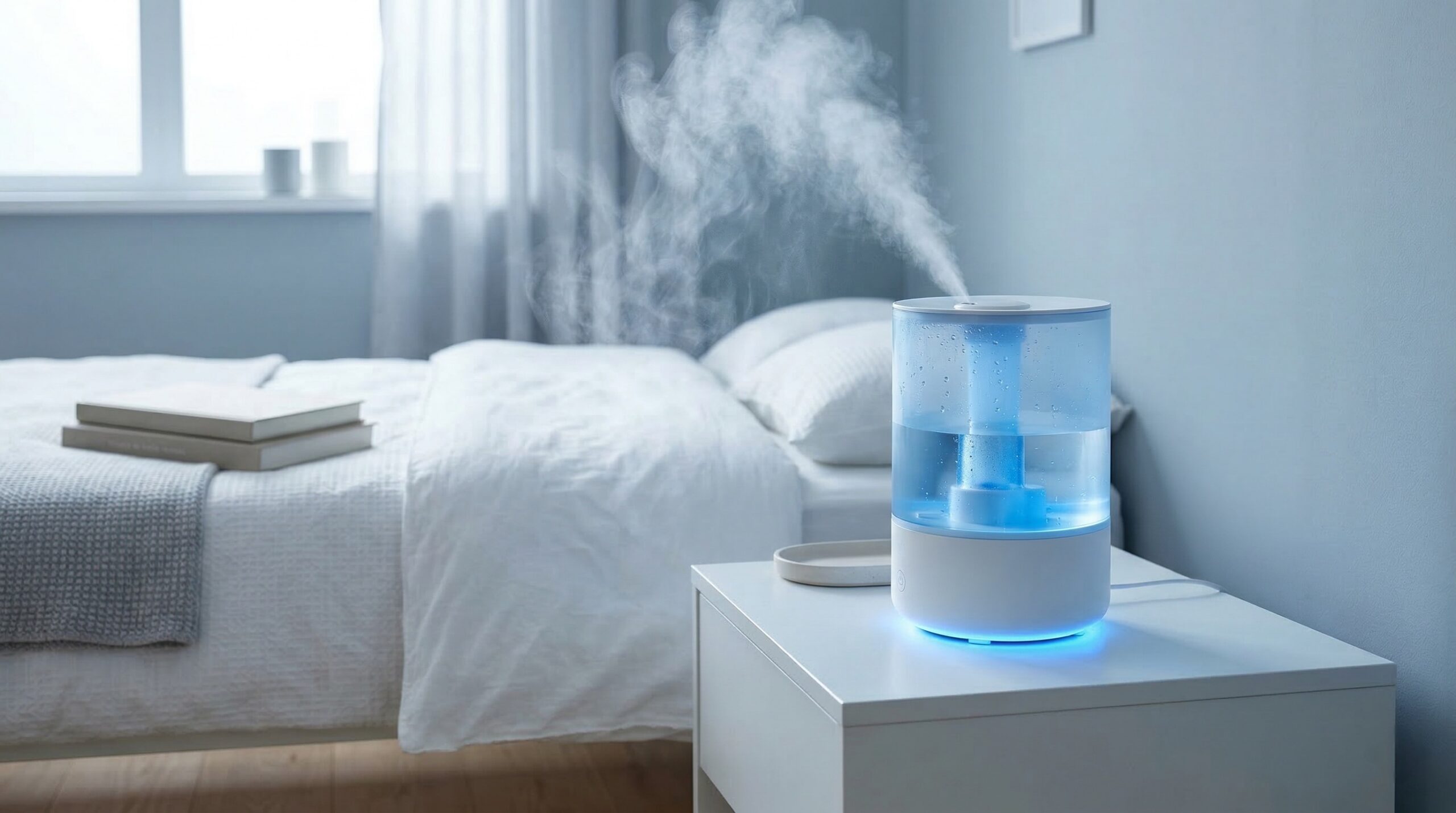
- Evaporative-style room humidification is generally the safer home approach when you want broad ambient control rather than direct moisture near one instrument.
The Bad
- Not a guitar-specific humidifier, so it will not focus moisture where a single cased instrument needs it most.
- Takes more space and maintenance than a simple in-case humidifier.
- You still need to track the room with a hygrometer and adjust output based on seasonal conditions.
Our Take: If you have a small guitar room, keep instruments on stands, or rotate among several acoustics during a dry winter, a whole-room evaporative unit can be the more practical choice than trying to manage each case separately.
How to use a guitar humidifier safely and effectively
Start with placement. If you use a soundhole humidifier, install it exactly as directed so it hangs or sits where the maker intended, without wet surfaces touching the guitar. If you use a room humidifier, put it in the room rather than right next to the instrument, and avoid directing damp air straight at the body or neck.
Refill carefully. Sponge- or reservoir-based systems are useful, but overfilling is the biggest avoidable risk. Before putting any humidifier into a case, make sure there is no dripping water, no pooled moisture, and no obviously saturated exterior. A little caution here goes a long way toward preventing finish or wood problems.
Check your readings more often during winter, forced-air heating season, or in desert climates. Small humidifiers can dry out surprisingly fast when the air is very dry. If you notice your case or room still struggling to stay in range even with regular refills, that is a sign your setup may be too small for the conditions.
Clean and inspect the setup regularly too. Broader home guidance from the EPA humidifier use and care page is a good reminder that poorly maintained humidifiers can become their own moisture problem. If you are using a room unit, keep tanks and wick components clean and watch for musty odors or visible residue.
Also keep an eye on excess dampness. The EPA mold and moisture guide and CDC mold cleanup guidance both reinforce the basic principle that too much moisture indoors can create a different set of problems. For guitars, that means you should not chase high humidity thinking more is better. Stability is the goal.
If you are not sure whether your guitar is reacting to low humidity, common warning signs include a sinking top, fret ends feeling sharper, lower action from wood shrinkage, or visible cracks. Signs of too much humidity can include a swollen or puffy top, rising action, a case that feels damp, or persistently high hygrometer readings. If the instrument already shows damage, it is smart to ask a qualified repair tech before trying to fix it with humidity alone.
Other Notable Alternatives Worth Considering
- O Oasis OH-5 Humidifier for Acoustic Guitars — This is listed in this category based on retailer data; we haven’t independently verified specific performance. It may be worth a closer look if you are comparing Oasis options, but we would still confirm fit, refill method, and leak-control design before buying.
FAQ
What humidity level is best for an acoustic guitar?
For most acoustic guitars, the usual target is about 45% to 55% relative humidity. That range is widely echoed in guitar-care guidance because very dry air can shrink wood and increase crack risk, while overly damp conditions can swell the top and affect playability. The goal is not hitting one exact number every minute, but keeping conditions reasonably stable.
Is a soundhole humidifier better than a room humidifier for one guitar stored in a case?
Usually, yes. If you have one acoustic guitar and it stays in its case, a soundhole or in-case humidifier is typically more efficient because it controls a much smaller enclosed space. A room humidifier makes more sense when you keep several guitars out on stands or want to stabilize the whole room rather than one case.
How often do guitar humidifiers need refilling?
It depends on your climate, your heating system, and how tightly the case seals. In a mild home, a case humidifier may last quite a while between refills, but in a very dry house or during winter heating season, you may need to check it every few days. If your hygrometer shows the case repeatedly dropping below range, refill frequency probably needs to increase or the overall setup may need to change.
Are two-way humidity packs worth the ongoing replacement cost?
They can be, especially for travelers, first-time owners, or people who want a simpler routine. The tradeoff is long-term cost, since replacement packs add up faster than refillable systems. If convenience and lower leak risk matter more to you than refill-pack expense, a two-way setup can be a very reasonable choice.
Can a guitar be over-humidified?
Yes. Too much moisture can make the top swell, raise the action, and leave the case feeling damp. That is one reason we do not recommend using any guitar humidifier by feel alone. Pair it with a hygrometer and aim for a stable middle range instead of pushing humidity as high as possible.
Do I really need a hygrometer with a guitar humidifier?
Yes, we think so. Even a well-designed humidifier cannot tell you what is happening inside your case or room unless you measure it. A hygrometer helps you avoid both under-humidifying and over-humidifying, which is especially important when seasons change or indoor heating dries the air out quickly.
What is the safest setup for very dry climates?
For a single acoustic guitar, start with a leak-resistant in-case or soundhole humidifier plus a hygrometer, and expect frequent checks when indoor air is extremely dry. If readings still stay low despite regular maintenance, moving to a room humidifier for the entire storage space may be more effective. In severe conditions, some owners use both a room humidifier and a case-level solution, but only with careful monitoring.
Should I humidify the case or the whole room?
If the guitar lives in its case, humidifying the case is usually more efficient and easier to control. If you own multiple guitars, leave them on stands, or spend a lot of time playing in a dedicated music room, whole-room humidity control can be the better fit. Think about where the instrument actually spends most of its time, not just where you play it.
Bottom Line
The Oasis Guitar Humidifier OH-1 is still the best fit for most buyers because it focuses humidity directly where a cased acoustic guitar needs it most, without forcing you to humidify an entire room. It is not maintenance-free, and it works best with a hygrometer, but for single-guitar owners who want a practical, proven solution, it is the clearest starting point. If you store several guitars outside their cases, step up to a room approach like the Vornado instead of asking one small case humidifier to do too much.
Affiliate disclosure: This article contains affiliate links. We earn a small commission at no extra cost to you.