
TL;DR
The Pure Enrichment MistAire is a sensible buy if you want a compact, quiet cool-mist humidifier for a small bedroom, nursery, or office and you’re willing to stay on top of refills and cleaning. It makes the most sense for sleep-focused use in genuinely small rooms, but it is easier to outgrow than larger-capacity humidifiers if you need stronger output, longer runtime, or less day-to-day maintenance.
What Pure Enrichment MistAire Actually Is
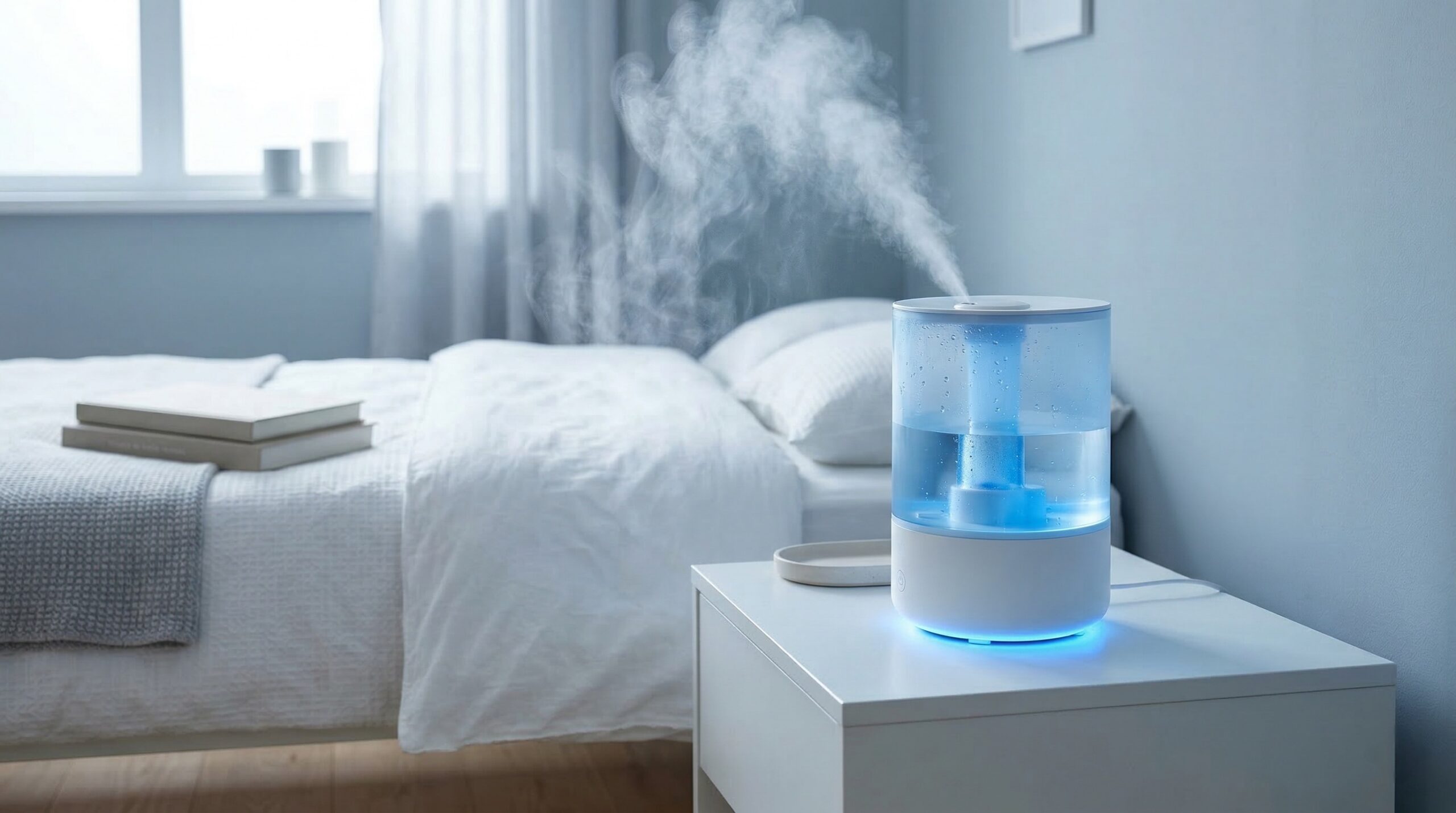
The Pure Enrichment MistAire is a small ultrasonic cool-mist humidifier. In plain terms, that means it uses high-frequency vibration to turn water into a visible mist, rather than using a wick filter and fan like an evaporative model. The big practical upside is noise: ultrasonic humidifiers are often much quieter in bedrooms and nurseries because they don’t rely on the same fan-driven airflow. That quiet operation is one of the main reasons buyers look at this model in the first place.
It is best understood as a personal-room or small-room humidifier, not a whole-home fix and not the right tool for a large open living area. That distinction matters because buyer satisfaction with humidifiers often comes down to expectations. A unit that feels excellent in a closed bedroom can feel underpowered in a bigger room, especially if the ceiling is high, the door stays open, or the HVAC system is constantly moving dry air through the space. AHAM sizing guidance is a useful reality check here: room fit is more than a simple floor-area number.
The MistAire also fits a specific use case: cool mist for comfort during dry weather, heating season, overnight congestion, or general dry-air irritation. Many shoppers choose this style because it doesn’t add heat to the room. That can be useful in nurseries, bedrooms, and warmer climates where a warm-mist unit may feel less comfortable.
The tradeoff is maintenance. Research and public-health guidance consistently point to the same issue with humidifiers: if you do not clean them regularly, standing water and residue can become part of the problem instead of the solution. The EPA humidifier use and care guidance is worth following, especially for cleaning frequency, drying between uses, and water handling. Water quality matters too. With ultrasonic humidifiers, hard tap water can leave mineral residue or “white dust” on nearby surfaces, so distilled or demineralized water is often the better choice.
In short, the MistAire is a compact comfort appliance for small spaces. It is not complicated, but it works best when you pair it with realistic room-size expectations, regular cleaning, and a hygrometer so you can keep indoor humidity in the healthy range rather than guessing.
Who Pure Enrichment MistAire Fits Best
This humidifier fits buyers who want one main thing above all else: quiet overnight operation in a small room. If your bedroom, nursery, or home office tends to get dry in winter and you do not want fan noise next to the bed, the MistAire lines up well with that need. Verified owner feedback supports that point: “It is very quiet (extremely low "white noise" and occasional gurgles)” — verified buyer, 3 stars.
It is also a reasonable pick for people who are not trying to humidify a whole floor of the house. If your goal is to make one sleeping space more comfortable, this style of humidifier can be enough. Buyers who report the best experience usually use it in closed or mostly closed rooms, rather than open layouts where moisture disperses too quickly.
The MistAire is especially easy to recommend to people who already understand basic humidity management. That means using a hygrometer, starting on a lower mist setting, and aiming for about 30% to 50% relative humidity instead of running the unit blindly. That range is broadly consistent with public-health guidance on comfort and moisture control. If you let humidity climb too high, condensation and mold risk go up, which is why the EPA mold and moisture guide matters here.
This model can also make sense for buyers dealing with seasonal dry-air discomfort. Some owners describe comfort benefits in straightforward terms, like this: “I feel so much better when I humidify the air, I breath easier, and sleep easier as well.” — verified buyer, 5 stars. We would treat that as individual owner experience, not a medical claim, but it does match the common reason people shop for bedside humidifiers in the first place.
It is a better fit for organized users than for set-it-and-forget-it shoppers. If you are comfortable emptying the tank, wiping things down, and using better water when needed, the MistAire’s simplicity is a plus. If you want long unattended runtime on high output, extra-large coverage, or the easiest possible cleaning routine, you are moving out of this model’s sweet spot.
Who Should Skip Pure Enrichment MistAire
You should skip the MistAire if you are shopping for a large-room humidifier or if your “small room” is only small on paper. Open doorways, vaulted ceilings, steady HVAC airflow, and drafty conditions can make a modest humidifier feel much weaker than you hoped. The most common disappointment with compact ultrasonic units is not that they fail completely, but that they cannot keep up with oversized spaces.
It is also not the best match for buyers who know they dislike frequent upkeep. Ultrasonic humidifiers can be quiet and effective, but they reward consistent cleaning habits. If you tend to refill and forget, an easier-to-maintain design or a different humidifier type may be a better long-term choice. Mayo Clinic and similar consumer-health guidance generally stress the same point: dirty humidifiers can spread unwanted contaminants rather than helping indoor comfort.
Buyers with hard water should think carefully too. If you do not want to buy distilled water or deal with mineral residue on furniture, an ultrasonic model can become annoying fast. White dust is not guaranteed in every home, but it is a known tradeoff with this humidifier style.
You may also want to skip it if you are relying heavily on maximum runtime claims. “Up to” numbers are usually achieved under the most conservative conditions, often at the lowest output setting. In real use, stronger mist means faster tank depletion. That mismatch between ad copy and daily life is one reason some owners come away less impressed, even when the unit itself is doing what this class of humidifier normally does.
A fair critical takeaway from buyer reports is that the MistAire is not a magic fix for every room. As one of the verified owner comments implies, “It is very quiet (extremely low "white noise" and occasional gurgles)” — verified buyer, 3 stars. That quote is positive on noise, but the 3-star rating is still a reminder that quiet operation alone does not guarantee total satisfaction if output, refill frequency, or room match falls short of expectations.
Price and Value
At roughly $40 to $50, the Pure Enrichment MistAire sits in the accessible end of the humidifier market. That pricing makes sense for a small ultrasonic unit aimed at bedside and nursery use. You are not paying for whole-home capacity, advanced smart controls, or a large tank. You are mainly paying for compact size, low noise, and straightforward operation.
That can be a good value if those are exactly your priorities. For a buyer who wants relief from dry sleeping air in one small room, a lower-priced ultrasonic humidifier often delivers enough comfort without requiring a much larger upfront spend. In that case, the MistAire’s value comes from fit: quiet enough for overnight use, small enough for a dresser or nightstand, and simple enough for first-time humidifier owners.
Where value gets weaker is when buyers stretch it beyond its lane. If you need coverage for a bigger room, fewer refills, or easier scrubbing access, a pricier model may actually cost less in frustration. Spending more for a larger tank, top-fill design, or a different humidifier type can make sense if you use it nightly for months at a time.
It is also smart to factor in ownership costs that do not show up in the sticker price. Distilled water can add to the monthly cost in hard-water areas. Time matters too: a humidifier that is cheap to buy but annoying to clean may not feel like a bargain after a full winter of use.
So the best way to think about value here is simple: if your room is small, your expectations are realistic, and you do not mind upkeep, the MistAire is competitively priced. If you are already worried about refill frequency, mineral dust, or room coverage, paying more upfront for a larger or easier-to-maintain unit may be the smarter purchase.
Common Mistakes When Trying Pure Enrichment MistAire
The biggest mistake is using it in a room that is too large or too open. A humidifier can only add so much moisture per hour, and compact models are the most sensitive to room mismatch. Buyers often look at a square-foot number and stop there, but actual room volume matters. High ceilings, open hallways, and constant airflow can make a supposedly suitable room act much bigger.
The second common mistake is trusting maximum runtime claims as if they apply to every setting. They usually do not. If you like a visible plume and run the mist higher, expect more frequent refills. This is normal for the category, not unique to one brand, but it still catches shoppers off guard.
Another mistake is skipping the hygrometer. Without one, it is easy to over-humidify a small room, especially overnight with the door closed. Public-health guidance is pretty clear here: indoor humidity that stays too high can encourage condensation, mold, and dust-mite problems. We strongly prefer measured humidity over guesswork, especially in nurseries and tightly closed bedrooms.
Water choice is another place owners get tripped up. If your tap water is mineral-heavy, using it in an ultrasonic humidifier can lead to residue on nearby surfaces. That does not mean the unit is defective. It often means the water source is the real issue. Distilled or demineralized water is the better move if white dust becomes a problem.
Cleaning neglect is probably the costliest mistake because it affects both performance and hygiene. Tanks and internal surfaces should not be left stagnant between uses. The EPA humidifier use and care page and CDC mold cleanup guidance are useful reminders that excess moisture and poor maintenance can create indoor-air problems, not just solve them.
Finally, some buyers expect every humidifier to feel dramatic right away. In a small room, gradual improvement is more realistic than an instant tropical effect. Owner feedback often points back to comfort and sleep rather than headline output. As one verified buyer put it, “I feel so much better when I humidify the air, I breath easier, and sleep easier as well.” — verified buyer, 5 stars. That is the right lens for this product: modest, room-level comfort support when used correctly.
FAQ
Is this humidifier good for large rooms?
Not really. The MistAire is a better fit for small rooms such as bedrooms, nurseries, or home offices. If your space is open, drafty, or has high ceilings, it may struggle to maintain your target humidity. AHAM-style room matching is important here: actual room volume and airflow matter as much as square footage.
How long will the tank last in real use?
Usually less time than the maximum advertised runtime if you use medium or high mist. “Up to” figures are generally based on low-output conditions. If you want overnight use with fewer interruptions, keep your expectations conservative and assume higher output will shorten runtime.
Will it leave white dust on furniture?
It can, especially if you use hard tap water. That is a known issue with many ultrasonic humidifiers because minerals in the water can end up as fine residue. Distilled or demineralized water often helps reduce that problem.
What humidity level should I aim for indoors?
A good target is about 30% to 50% relative humidity. That range is commonly recommended for comfort while helping avoid excess indoor moisture. For practical guidance, see the EPA mold and moisture guide. A simple hygrometer is the easiest way to stay in range.
Is it a good bedroom or nursery humidifier?
Yes, if quiet operation is your top priority and the room is genuinely small. Ultrasonic units are often chosen for sleep spaces because they run more quietly than many evaporative models. Just be prepared for regular cleaning and sensible placement away from bedding, walls, and electronics.
How often should I clean a humidifier like this?
Frequently enough that water does not sit stagnant and mineral buildup does not get out of hand. Exact schedules vary by use, but daily emptying and regular deeper cleaning are good habits. The EPA humidifier use and care page is a solid reference.
Can a humidifier help with dry-air discomfort at night?
It can for some people, especially during heating season when indoor air gets very dry. Buyer reports often mention easier sleep and less dryness, but results depend on room conditions and keeping humidity in a healthy range. If you have asthma, allergies, or chronic breathing symptoms, a board-certified pulmonologist or certified IAQ professional can help you decide whether humidity is likely to help in your situation.
Looking for these on Amazon? Browse pure enrichment mistaire ultrasonic cool mist humidifier on Amazon →
Bottom Line
The Pure Enrichment MistAire is worth buying if you need a quiet, compact cool-mist humidifier for a small room and you are willing to handle regular cleaning and realistic refill cycles. It is a good fit for bedside comfort, but not the right choice for buyers who need large-room coverage, high-output runtime, or low-maintenance ownership.
Affiliate disclosure: This article contains affiliate links. We earn a small commission at no extra cost to you.