
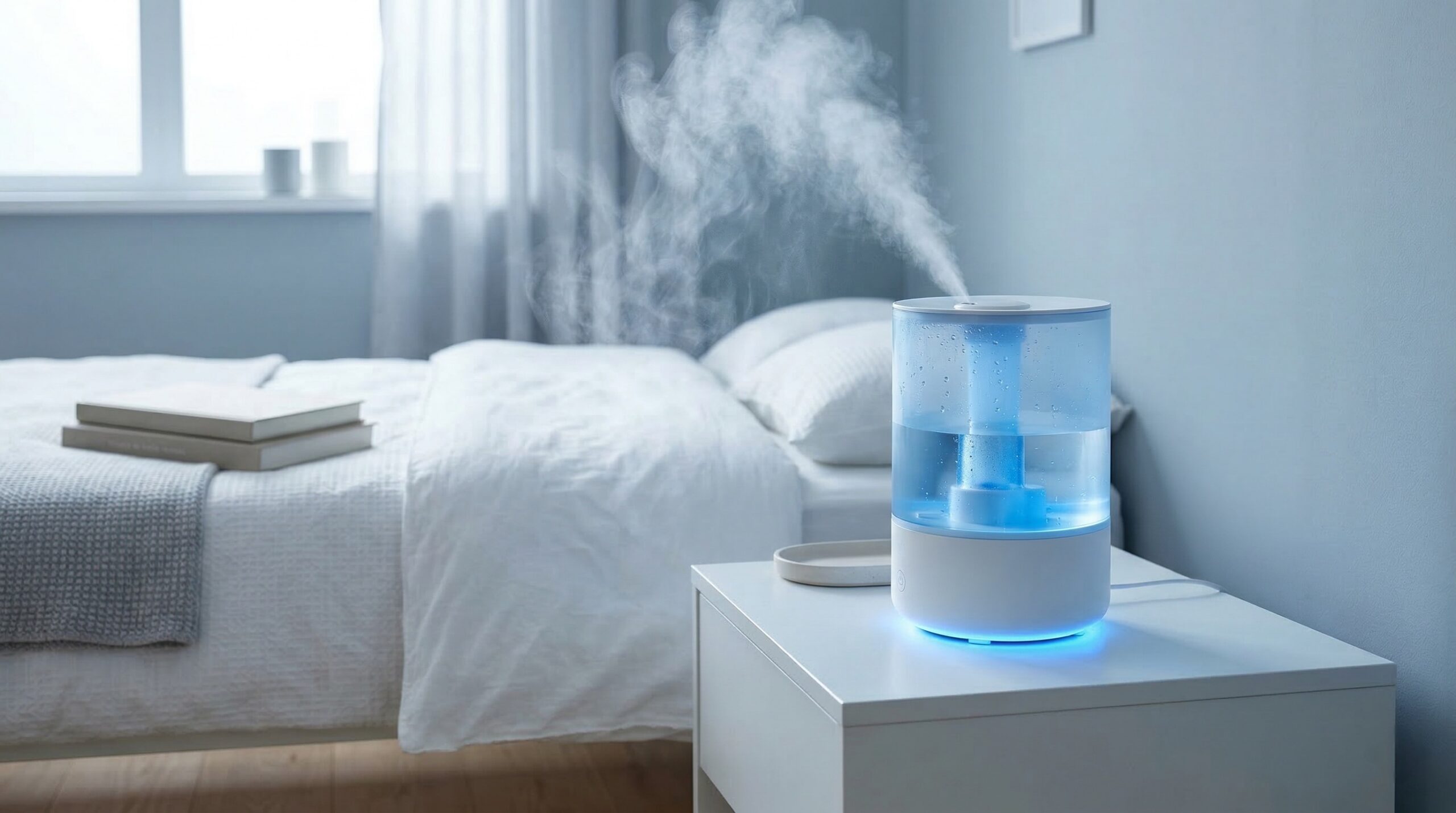
TL;DR
If you’re dealing with daily hot showers and lingering dampness, the “best small dehumidifier for bathroom” is usually the smallest compressor model you can place safely — ideally with an easy emptying routine or a continuous drain. Tiny thermoelectric (Peltier) units can help in lightly used bathrooms, but they’re often too low-capacity to keep up with frequent steam.
Before you buy, make sure your bathroom exhaust fan actually vents outdoors and run it during and after showers — better ventilation can beat any mini dehumidifier for moisture control.
What Small Bathroom Dehumidifiers Actually Are
A small bathroom dehumidifier is a compact appliance designed to pull moisture out of the air after showers so your bathroom dries faster — meaning fewer fogged mirrors, less condensation on walls and ceilings, and (ideally) less musty odor and mold risk. In practice, these products fall into two main “formulas,” and picking the right one matters more than the advertised “covers up to X sq ft” claims.
1) Thermoelectric (Peltier) mini dehumidifiers
These are the truly small, tabletop-style units you’ll see marketed for bathrooms, closets, and RVs. They’re usually quieter and lighter, and they often have simple controls plus an auto shutoff when the tank is full. The tradeoff is capacity: they typically remove moisture slowly, so they work best when the bathroom is lightly used, has at least some ventilation, and your goal is “dry down over time,” not rapid recovery after a steamy shower.
2) Compressor (refrigerant) dehumidifiers
These look more like “real” dehumidifiers (even at small sizes). They’re heavier, typically louder, and they take more floor space — but they remove dramatically more water in humid conditions. If you shower daily, have multiple people using the bathroom, or you regularly see condensation on walls/paint, a small compressor model is usually the only “small-ish” option that makes a meaningful difference. Many also support a hose for continuous drain, which can be a big deal in a bathroom where a tiny tank would fill fast.
What a bathroom dehumidifier can — and can’t — do
A dehumidifier’s job is mostly post-shower recovery: it helps the room return to a healthier humidity range after the spike. It won’t stop the humidity spike itself the way good exhaust ventilation can. For mold prevention, many indoor-air guidelines emphasize moisture control and keeping indoor humidity in check; aiming roughly around 30–50% RH (and generally below ~60% RH) is a common practical target. The EPA’s mold guidance and the CDC’s mold resources both stress that controlling moisture and fixing ventilation/leaks are the foundation — gadgets come second.
Who Small Bathroom Dehumidifiers Fit Best
Small bathroom dehumidifiers make the most sense when your bathroom gets damp, stays damp, and you either can’t improve ventilation easily — or you want extra help beyond the fan.
- You have a weak or missing exhaust fan. For example, a half-bath converted to a full bath, an older fan that’s too noisy to run, or a fan that doesn’t actually vent outdoors.
- You see frequent condensation. Mirror fog is normal, but consistent water beading on painted walls/ceilings, damp baseboards, or peeling paint points to moisture hanging around too long.
- You need a compact footprint. Tight layouts (vanity + toilet + tub crammed together) push you toward smaller units that can sit on a stable surface away from splash zones.
- Your goal is “drier faster,” not “bone dry instantly.” Even a good small unit may need an hour or more to bring RH back down after a hot shower, especially if the door stays closed.
- You’re willing to maintain it. Emptying a tank, wiping it out so it doesn’t get funky, and keeping intake/exhaust paths clear are part of the deal.
Owner feedback tends to be strongest when the buyer matches the tool to the space and expectations. One user with a tight, poorly ventilated bathroom described the benefit clearly: “honestly for a small space the idustmite dehumidifier works a treat without taking up half the floor. stops the walls from dripping at least” — Small bathroom with no vent on r/BuyItForLife
Who Should Skip Small Bathroom Dehumidifiers
There are also plenty of cases where buying a “small dehumidifier for bathroom” is the wrong first move — or where a tiny unit is likely to disappoint.
- You can fix the real issue: ventilation. If your fan is broken, poorly ducted, or vents into an attic, spending money on a mini dehumidifier can be a band-aid. A NATE-certified HVAC contractor can help verify proper venting and fan performance.
- Your bathroom is a daily steam chamber. Long, hot showers (especially multiple per day) can overwhelm mini Peltier units. In those homes, a small compressor unit — or an exhaust fan upgrade — usually makes more sense.
- You have no safe placement. Bathrooms are wet environments. If the only spot is where it can be splashed, tipped, or sit on a wet floor, skip it and focus on fan runtime + towel/curtain drying habits.
- You won’t empty/maintain it. A small tank fills quickly in humid conditions. If you already know you’ll forget, prioritize continuous drain capability (if feasible) or address ventilation instead.
Also, a reality check: truly “mini” units are often marketed like they can solve bathroom humidity by themselves. For many households, that expectation is the main problem — especially when the bathroom stays closed and there’s limited air exchange. If you’re not sure what’s reasonable for your setup, an IAQ professional can help you think in terms of moisture load (showers per day, duration, temperature) rather than just square footage.
Price and Value
Bathroom dehumidifier pricing tends to split into two bands:
- Mini thermoelectric units: often around $30–$40 for very compact models like the CLEVAST mini unit.
- Smaller “specialty” or premium compact units: can land around $139–$149 as with the iDustMite unit that’s positioned around allergy-friendly use and tight-space practicality.
- Small compressor dehumidifiers: typically start higher; for example, the Midea Cube 20-pint model is commonly in the $175–$200 range.
How to think about value in a bathroom
In a bathroom, “value” is less about the sticker price and more about whether the unit actually changes your day-to-day: faster dry-down, less condensation, fewer odors, and less time wiping down wet surfaces. If you shower daily and hate emptying tanks, the ability to use a hose for continuous drain (where safe) can be worth paying for. If you only need a modest boost for a guest bath, a cheaper mini unit can be fine — just go in expecting slower moisture removal.
If you’re comparing operating cost, compressor units generally remove more water per unit of electricity than tiny Peltier units in many real-world conditions. If efficiency matters, it’s worth browsing Energy Star’s dehumidifier guidance when you’re shopping compressor-style models.
Common Mistakes When Trying Small Bathroom Dehumidifiers
Most “this didn’t work” stories come down to setup and expectations. Here are the pitfalls we see most often in verified owner feedback and buyer reports — plus how to avoid them.
- Buying based on room size instead of moisture load. A small bathroom with daily hot showers can be a high-moisture environment. If you need quick recovery, you usually need compressor capacity, not the smallest possible box.
- Not running the exhaust fan alongside it. If your fan vents outdoors, it’s removing moist air at the source. Running both can speed dry-down dramatically compared with dehumidifying a sealed room.
- Placing it where airflow is blocked. Wedging the unit behind the toilet or tight against a wall can choke the intake/exhaust and reduce performance. Leave clearance and keep it on a stable, dry surface.
- Putting it in a splash zone. Dehumidifiers and water don’t mix. Don’t place any unit where it can be sprayed by the shower or where puddles form.
- Ignoring the emptying routine. Small tanks fill fast. If you don’t empty and rinse periodically, you can end up with stagnant odors.
One common expectation problem is believing a compact unit will completely stop condensation in a no-vent bathroom. Even when it helps, the result may be “less dripping,” not “perfectly dry.” As one owner put it: “honestly for a small space the idustmite dehumidifier works a treat without taking up half the floor. stops the walls from dripping at least” — Small bathroom with no vent on r/BuyItForLife
FAQ
What humidity should a bathroom be?
A practical goal is roughly 30–50% relative humidity, and generally keeping it below about 60% helps discourage mold. If you’re guessing, add a small hygrometer so you can see what happens after showers and how long it takes to recover. The EPA’s mold guidance emphasizes moisture control as the core strategy.
Do small bathroom dehumidifiers actually prevent mold?
They can help by reducing how long surfaces stay damp after showers, which is one piece of mold prevention. But they’re not a substitute for fixing moisture sources (leaks), improving ventilation, and cleaning existing growth. For health-focused guidance, see the CDC’s mold resources.
Is a mini thermoelectric (Peltier) dehumidifier enough for a daily shower bathroom?
Sometimes — but usually only if the bathroom is lightly used, the showers aren’t long/steamy, and you’re okay with slow dry-down. If you have heavy daily use, ongoing condensation on walls, or persistent musty odor, a small compressor unit is more likely to make a noticeable difference.
How long should I run a dehumidifier after a shower?
Run it until your hygrometer shows humidity returning near your target range. In many real homes, that can be 1–3+ hours depending on how steamy the shower was, whether the door is closed, and the unit’s capacity. Running the exhaust fan during and for 20–30 minutes after the shower often speeds up recovery.
Is it better to run the bathroom exhaust fan and a dehumidifier at the same time?
If your fan vents outdoors, yes. The fan removes moist air, while the dehumidifier helps dry what remains and can reduce lingering humidity. This “both together” approach is often more effective than either one alone — especially in a closed bathroom.
Can I use continuous drain in a bathroom?
If your dehumidifier supports a drain hose and you can route it safely, a bathroom can be convenient (for example, draining into a tub/shower). Make sure the hose slope is reliable, the hose won’t kink, and it won’t create a tripping hazard. If you’re unsure about safe placement and electrical safety in a wet area, consider asking a qualified HVAC contractor for practical placement advice.
Should I buy an Energy Star dehumidifier for a bathroom?
For compressor-style units, Energy Star certification can be a good sign for efficiency. It won’t guarantee quiet operation or perfect performance in every bathroom, but it’s a helpful filter when comparing similar sizes. See Energy Star’s dehumidifier guidance for what the label means.
Looking for these on Amazon? Browse small dehumidifier for bathroom on Amazon →
Bottom Line
A small bathroom dehumidifier can be a helpful tool for post-shower dry-down, but only if you match the unit type and capacity to your real moisture load and you can live with the emptying/drain routine. For daily steamy bathrooms, lean toward the smallest compressor unit you can place safely; for light-duty use, a compact mini unit may be enough.
And don’t skip the basics: verify your exhaust fan vents outdoors and run it consistently — moisture control and ventilation are still the foundation, as emphasized by the EPA and CDC.
Affiliate disclosure: This article contains affiliate links. We earn a small commission at no extra cost to you.