
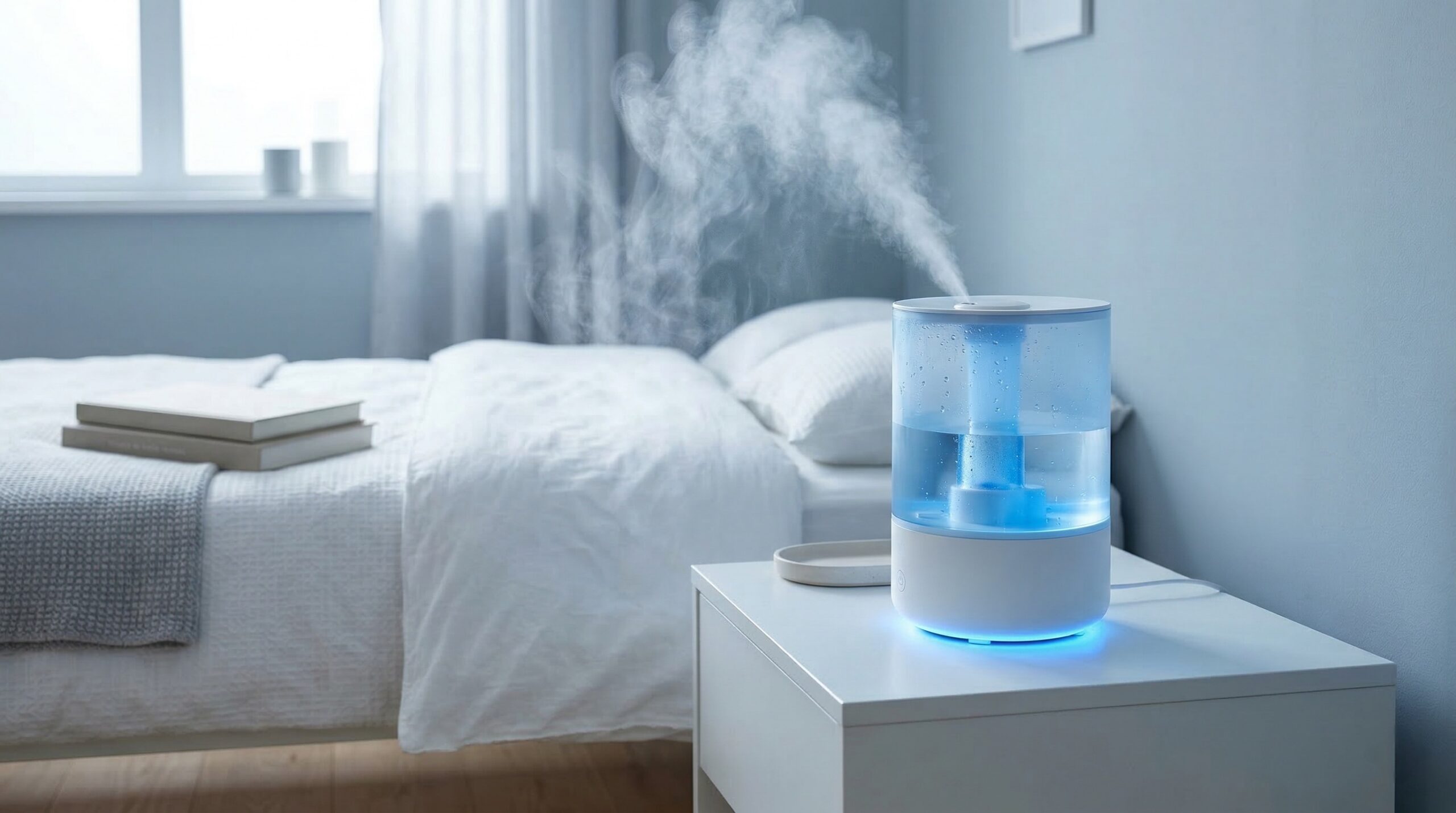
TL;DR
For most homes, a cool-mist humidifier is the safer default because it adds moisture without the burn risk that comes with hot water or steam. If you specifically want heated vapor and can place the unit securely away from kids and pets, warm mist can still make sense, but many buyers will be better served by an evaporative cool-mist model that avoids hot steam and can reduce white-dust issues.
What Warm- or Cool-Mist Humidifiers Actually Are
A warm- or cool-mist humidifier does the same basic job either way: it adds moisture to dry indoor air. That matters because dry air can make bedrooms feel uncomfortable, irritate nasal passages, dry out skin, and worsen the general feeling of a cold or winter dryness. But the big buying mistake is assuming warm mist and cool mist perform very differently in terms of humidity output alone. In real home use, the more important differences are usually safety, maintenance, and how the machine handles minerals in your water.
Warm-mist humidifiers create moisture by heating water and releasing steam or warm vapor. That can appeal to buyers who like the feel of heated mist or want a model that may send fewer dissolved minerals into the room air. Still, a warm-mist unit contains hot water or hot internal parts, so placement and burn-risk awareness matter a lot more here.
Cool-mist humidifiers come in two main styles. Ultrasonic models use vibration to create a visible mist, while evaporative models use a wick or filter and a fan to move moisture into the air. Ultrasonic cool mist is often quieter and can feel more pleasant in bedrooms, but it may spread mineral residue as white dust if you use hard tap water. Evaporative cool mist is often the practical middle path: no hot steam, less white dust risk, and straightforward everyday use, though filters and fan noise can be tradeoffs.
Authoritative guidance broadly supports looking beyond the mist temperature itself. Mayo Clinic notes that warm- and cool-mist options are similarly effective for humidity, while cool mist is generally preferred around children because hot water or steam can burn. The EPA also stresses routine maintenance, water quality, and drying out the unit between uses in its EPA humidifier use and care guidance. In other words, the best humidifier is not the one with the most dramatic-looking mist. It is the one that fits your room, your household, and the cleaning routine you will actually keep up with.
Who Warm- or Cool-Mist Humidifiers Fit Best
Cool mist fits most buyers best, especially in bedrooms, nurseries, family spaces, and homes with pets. If there is any realistic chance that a child could touch, bump, or tip the unit, cool mist is the easier recommendation. The same goes for buyers who just want to set up a humidifier for overnight dryness without worrying about hot steam.
Warm mist fits a narrower buyer. It makes more sense in adults-only spaces, low-traffic rooms, or a home office where the machine can stay out of reach and undisturbed. It can also suit shoppers who strongly prefer boiled vapor or who are trying to minimize airborne minerals compared with an ultrasonic unit using tap water.
A third group should look closely at evaporative cool mist. This is often the smartest fit for buyers who want the safety profile of cool mist but do not want to deal with visible white dust on furniture. If your tap water is hard, this style is often easier to live with than an ultrasonic model unless you are willing to buy distilled water regularly.
For a real-world example of why cool mist appeals to many households, one owner said of a filter-free cool-mist model, “We put the unit in a central location in our place and it’s perfect.” — verified buyer, 5 stars. That kind of feedback lines up with what we usually see in this category: buyers tend to be happiest when the humidifier is simple to place, simple to run, and not stressful to use around daily household traffic.
If you are shopping for a bedroom or general living area, start with room-size fit and easy cleaning rather than the warm-versus-cool label. AHAM sizing guidance is useful here because proper coverage matters more than marketing claims about mist feel. And if excess moisture is a concern in your home, keep in mind that humidity should stay controlled to avoid damp conditions that can encourage mold, as explained in the EPA mold and moisture guide.
Who Should Skip Warm- or Cool-Mist Humidifiers
You should skip warm mist if the humidifier will go in a nursery, child’s bedroom, playroom, or any area where pets roam freely. That is the clearest no-go scenario. The moisture benefit is not worth introducing a hot-water or steam burn hazard when a cool-mist alternative can do the same humidity job more safely.
You should also skip ultrasonic cool mist if you know your local tap water is mineral-heavy and you do not want to switch to distilled or purified water. For some buyers, the white dust issue becomes annoying fast. It can settle on nearby surfaces and turn a seemingly easy humidifier into a higher-maintenance one.
Buyers who are not willing to clean a humidifier regularly should be cautious with either type. No humidifier stays low-maintenance if water sits too long, scale builds up, or the tank design is hard to scrub. The EPA’s guidance is straightforward on this point: regular emptying, drying, and cleaning matter because humidifiers can spread contaminants if neglected.
Some owner feedback also shows that not every humidifier experience translates into noticeable comfort right away. One critical review put it bluntly: “the mist generated does not seem to have any health benefits for better breathing” — verified buyer, 2 stars. That does not mean humidifiers are ineffective as a category. It means buyers should have realistic expectations, size the unit correctly, and remember that humidity support is not the same thing as a medical treatment. If breathing symptoms are persistent, that is a good point to talk with a board-certified pulmonologist rather than keep cycling through machines.
Price and Value
From the price data available here, a mainstream cool-mist option like the Vicks Filter-Free Ultrasonic Humidifier sits in the roughly $50 to $75 range. That is a common budget band for bedroom and small-to-medium room humidifiers, and it is often where shoppers choose between filter-free ultrasonic convenience and the steadier operating style of basic evaporative units.
Value depends less on warm versus cool in theory and more on what the design costs you over time. A lower-priced ultrasonic cool-mist model can look like a bargain, but if your home has hard water and you end up buying distilled water constantly, your true cost goes up. An evaporative cool-mist humidifier may cost more in replacement filters, but it can save hassle if white dust has been a problem for you. Warm-mist units can be priced similarly to cool-mist models, but the value equation changes if the extra safety precautions make them inconvenient to use in the room you actually had in mind.
We would frame it this way:
- Best pure value for most homes: evaporative cool mist, if you want a safer setup with less white-dust risk.
- Best budget convenience: ultrasonic cool mist, if you already use distilled water or have soft water.
- Best niche value: warm mist, only if you specifically want heated vapor and can safely place the unit out of reach.
When comparing options, look beyond sticker price. Tank opening size, refill convenience, cleaning access, and ongoing filter or water costs usually determine whether a humidifier still feels like a good buy a few months later.
Common Mistakes When Trying Warm- or Cool-Mist Humidifiers
The first common mistake is choosing warm mist for a child’s room because the name sounds more soothing. For safety reasons, that is usually the wrong call. Evidence from major medical guidance points buyers toward cool mist around children, since it avoids hot steam exposure.
The second mistake is treating maintenance like an afterthought. Both types can become unpleasant to use if scale, film, or stagnant water build up. Buyers often focus on runtime and output, but if the tank opening is narrow or there are lots of internal corners, many owners end up cleaning less often than they should.
The third mistake is buying an ultrasonic cool-mist unit without thinking about your water quality. If your tap water leaves mineral spots on faucets or shower glass, there is a decent chance it will create white dust in an ultrasonic humidifier too. In that case, distilled water or a different humidifier type may be the better path.
The fourth mistake is expecting any humidifier to solve breathing issues instantly. Buyer reports are often most positive when owners use the unit in the right-size room, monitor humidity, and keep up with cleaning rather than just turning it on and hoping for a dramatic health change.
And the fifth mistake is placing the unit poorly. One owner’s positive note, “We put the unit in a central location in our place and it’s perfect.” — verified buyer, 5 stars, points to something simple but important: placement affects how evenly moisture spreads and whether the machine becomes part of your routine instead of a hassle. Follow manufacturer spacing guidance, keep it on a stable surface, and avoid crowding it into corners where dampness can collect.
FAQ
Which is better for a baby or nursery?
Cool mist is generally the better choice for a baby or nursery because it avoids the burn risk that comes with hot water or steam. Mayo Clinic guidance supports cool mist around children for that reason. Beyond safety, choose a model with easy-to-clean parts and place it where mist will not settle directly onto bedding or walls.
Does warm mist humidify better than cool mist?
Not necessarily. Both types can raise indoor humidity effectively when the unit is properly sized and maintained. In most cases, buyers should focus more on room coverage, cleaning ease, and everyday safety than on assuming warm mist will perform dramatically better.
How do I avoid white dust with a cool-mist humidifier?
If you are using an ultrasonic cool-mist model, distilled or purified water is the most common fix. The EPA notes that dissolved minerals can be dispersed by some humidifiers, which is why its EPA humidifier use and care advice discusses water quality. If you do not want to rely on distilled water, consider an evaporative humidifier instead.
Is warm mist more hygienic?
Warm mist may release fewer minerals into the air, and heating can reduce some microbes before mist is emitted, but it should not be treated as self-sanitizing. It still needs regular emptying, descaling, and cleaning. Neglected humidifiers of any type can contribute to poor indoor conditions if moisture and residue build up.
What matters most when buying a humidifier?
For most buyers, the top priorities are safety, easy cleaning, room-size fit, and compatibility with your water quality. Noise, refill frequency, and whether a model needs replacement filters also matter. The right humidifier is the one you can safely use and realistically maintain every week.
Is evaporative cool mist better than ultrasonic cool mist?
For many households, yes. Evaporative cool mist is often the stronger all-around choice because it avoids hot steam and can reduce visible white dust compared with ultrasonic models using hard tap water. The tradeoffs are usually more fan noise and possible filter replacement costs. If you want quiet operation and are willing to use distilled water, ultrasonic can still be a good fit.
Can a humidifier cause mold problems?
Yes, if you over-humidify a room or let moisture collect on surfaces. That is why it is important to avoid running a humidifier harder than needed and to watch for condensation on windows, walls, or nearby furniture. The EPA mold and moisture guide and CDC mold cleanup guidance both reinforce that excess moisture indoors can contribute to mold growth.
Looking for these on Amazon? Browse warm or cool mist humidifier on Amazon →
Bottom Line
If you are choosing between warm and cool mist, cool mist is the better fit for most buyers because it offers similar humidity support with fewer safety concerns. Warm mist still has a place in adults-only, low-traffic rooms, but for most homes, an evaporative cool-mist humidifier is the most balanced option if you want safer moisture and less risk of white dust.
Affiliate disclosure: This article contains affiliate links. We earn a small commission at no extra cost to you.